Soft Mountain Water
Water & Soil
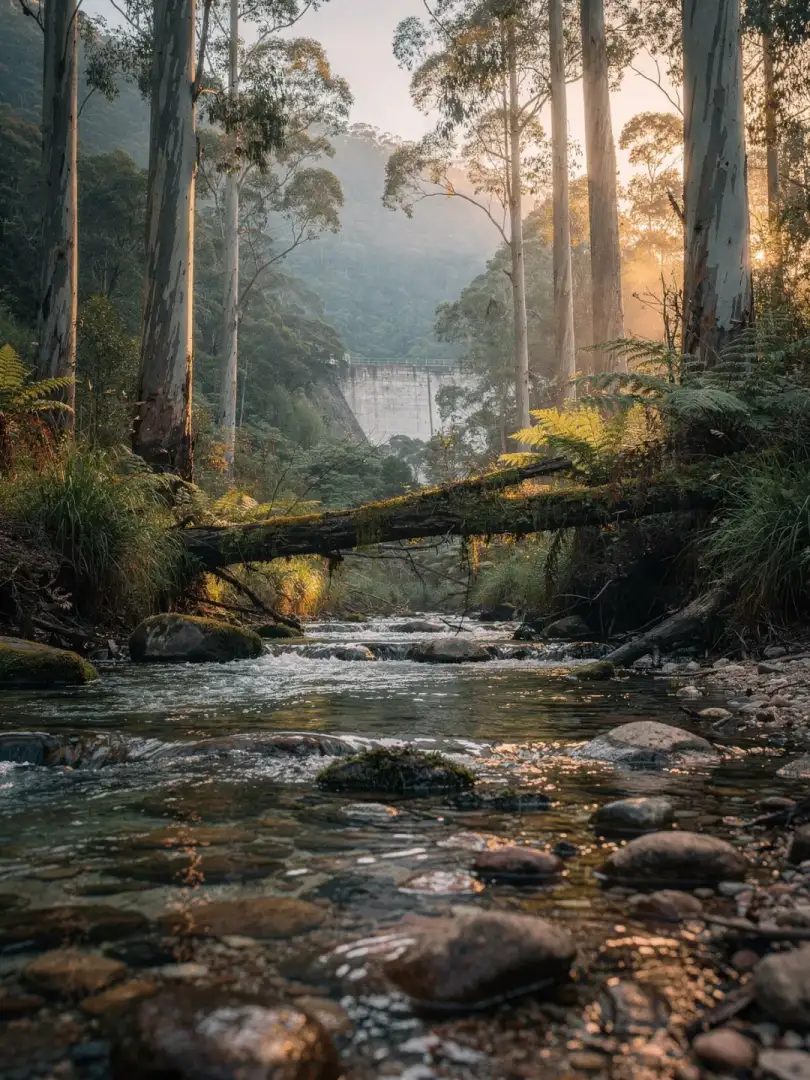
Where does the water for Melbourne's beer come from? Around 80 percent of the city's drinking water comes from uninhabited forests in the Yarra Ranges and the Central Highlands, a mountainous area east and north of the city. It's collected in the catchments of the Yarra, Thomson, Bunyip, and Goulburn rivers.
This water is considered soft, meaning it carries few dissolved minerals. Soft water lets hop bitterness come across smooth and clean, much like in the Czech town of Pilsen, where equally soft water flows. Dark beers like stout, on the other hand, need more carbonate, which brewers add here as needed.
However, nearly all breweries today treat their water. They soften it, filter it, or add salts in a targeted way. Tap water is therefore the starting point, not a recipe, and no brewer in Melbourne is bound to a particular water profile.
The terroir also shapes the beer less through rock and cellar than through climate. Melbourne has warm summers, and a pale lager here isn't aged in caves but in chilled stainless steel tanks. It's crucial that a lager ferments and matures cold, because warmth causes the yeast to produce fruity by-products that would count as a flaw in a clean pale lager. Cooling costs energy, and in a country with hot summers, it's a core part of the brewery, not an afterthought.
A second water belongs to the story: in northeastern Victoria, the Ovens River flows through a valley where hops have grown since the 19th century. More on this at the hop station.