Pale Malt, Adjuncts
Malt & Grain
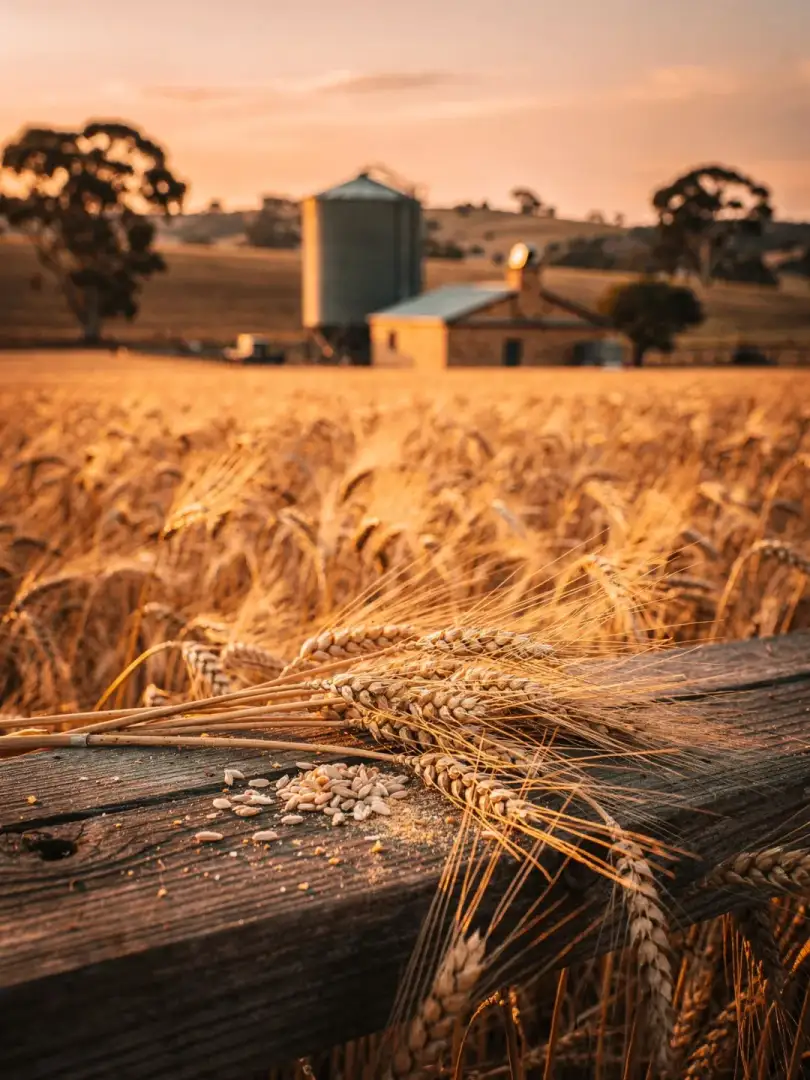
A pale lager like Victoria Bitter lives on pale malt. For this, barley is steeped at the maltings until it germinates, then dried on the kiln, a drying oven with warm air. At low heat, the malt stays pale and tastes lightly of bread and biscuit. It's precisely this understated malt that gives a lager room for hops that intervene only mildly, and for a yeast that works cleanly.
How strongly a beer is colored is measured in EBC, a brewers' color scale. A value of around 4 to 12 corresponds to the pale to golden lager that defines everyday drinking in Australia. Anyone wanting it darker adds caramel malt, which is dried at higher heat and brings notes of caramel and toffee.
Unlike in Bavaria, there's no Reinheitsgebot (purity law) in Australia. Brewers are therefore free to use adjuncts alongside barley malt, meaning unmalted grain or sugar that makes the wort fermentable without contributing much flavor. Breweries usually disclose which mix a particular beer uses.
Craft brewers in Fitzroy and Richmond work with a broader malt palette. An amber ale like Mountain Goat's Hightail Ale owes its copper color to extra caramel malt, while a pale ale stays lighter, leaving room for the hops. What goes into the brew kettle is ultimately up to the brewmaster, and that's why beers from small breweries change more from season to season than a lager from a large-scale operation.