Barley and Sugar Cane
Malt & Grain
A pale lager like XXXX Bitter relies mainly on pale barley malt. Malt is created by soaking barley until it sprouts, then halting growth in a kiln with heat. The gentler the heat, the paler the malt stays—and the softer the beer tastes.
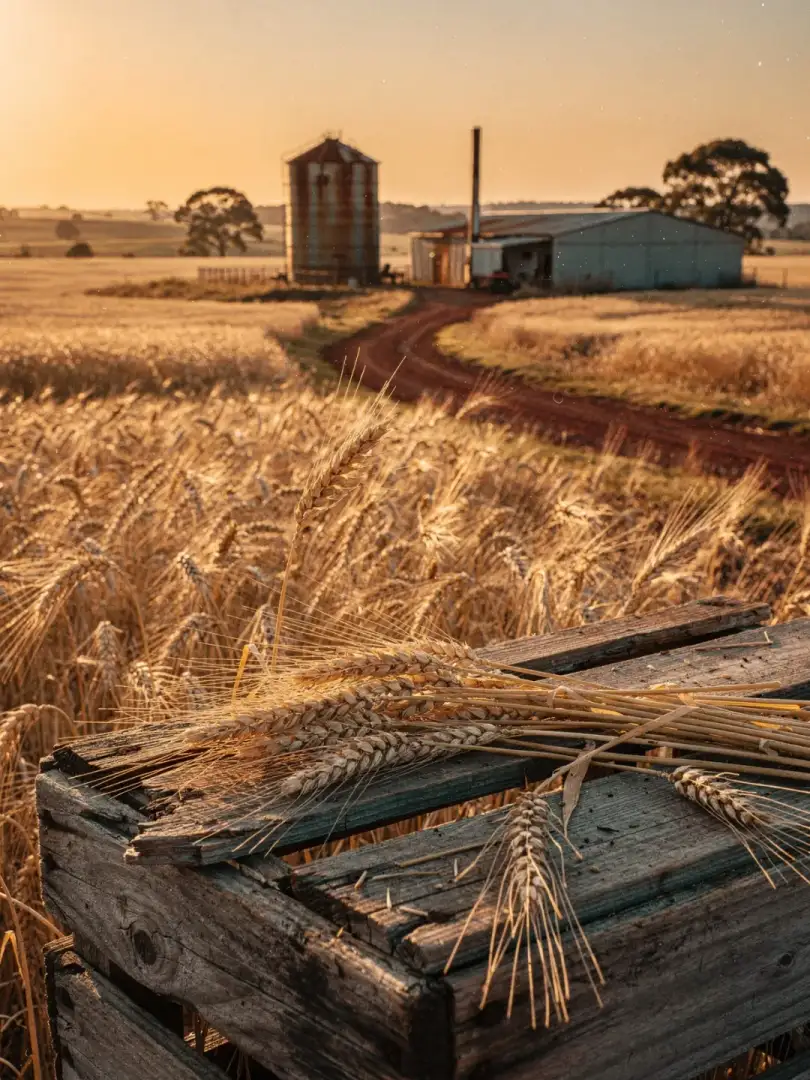
In the Southern Hemisphere, everything runs in reverse: Australian brewing barley is sown as a winter crop in the southern autumn and harvested in early summer, around the turn of the year. Maltsters process it into pale malt, which produces pale beers. It tastes of grain and biscuit rather than roasted notes—exactly the quiet foundation a lager needs for hot days.
Queensland is also Australia's sugar cane state, with enormous fields around Bundaberg. Cane sugar has traditionally been part of Australian brewing because it lightens the body of the beer. Brewers rarely reveal exactly how much goes into any given beer, and no fixed figure can be confirmed. Still, the sugar cane fields shape the landscape, right through to Bundaberg and its drinks.
It's worth noting that sugar isn't a substitute for malt but an addition. It ferments almost completely and leaves no malt body behind, so these beers taste dry and lean. In a hot country, that's an advantage: the beer doesn't feel heavy even after the third sip.
Brewers wanting darker beers need specialty malts: caramel malt makes a beer sweeter and copper-coloured, while roasted malt adds colour and coffee notes. Smaller brewers like Felons or Green Beacon use such malts mainly for their ales.