Cool and Slow
Yeast & Fermentation
What's the difference between lager and ale? The yeast makes the difference. Ale ferments with top-fermenting yeast, a Saccharomyces cerevisiae, which works at around 18 to 22 degrees Celsius and collects at the top of the beer. Lager ferments with bottom-fermenting yeast at cooler temperatures, settling to the bottom after fermentation.
Lager yeast is called Saccharomyces pastorianus and is a hybrid of two species. Because it works at colder temperatures, fewer fruity byproducts form. This gives the beer a cleaner, crisper taste. This is exactly what's wanted for pale beers like the Premium Lager in Hobart.
In Australia, ale was long the norm, because lager needs cold, and cold couldn't reliably be produced in summer for a long time. It was only with refrigeration machines that lager took over across the country. Tasmania's cool climate helped, but without technology, fermentation in summer remained difficult.
Cascade Pale Ale is a top-fermented beer, and according to the brewery, it has been brewed without interruption since 1832. If true, that would make it the oldest continuously brewed beer in Australia. It was created, in other words, before lager was common anywhere in Australia.
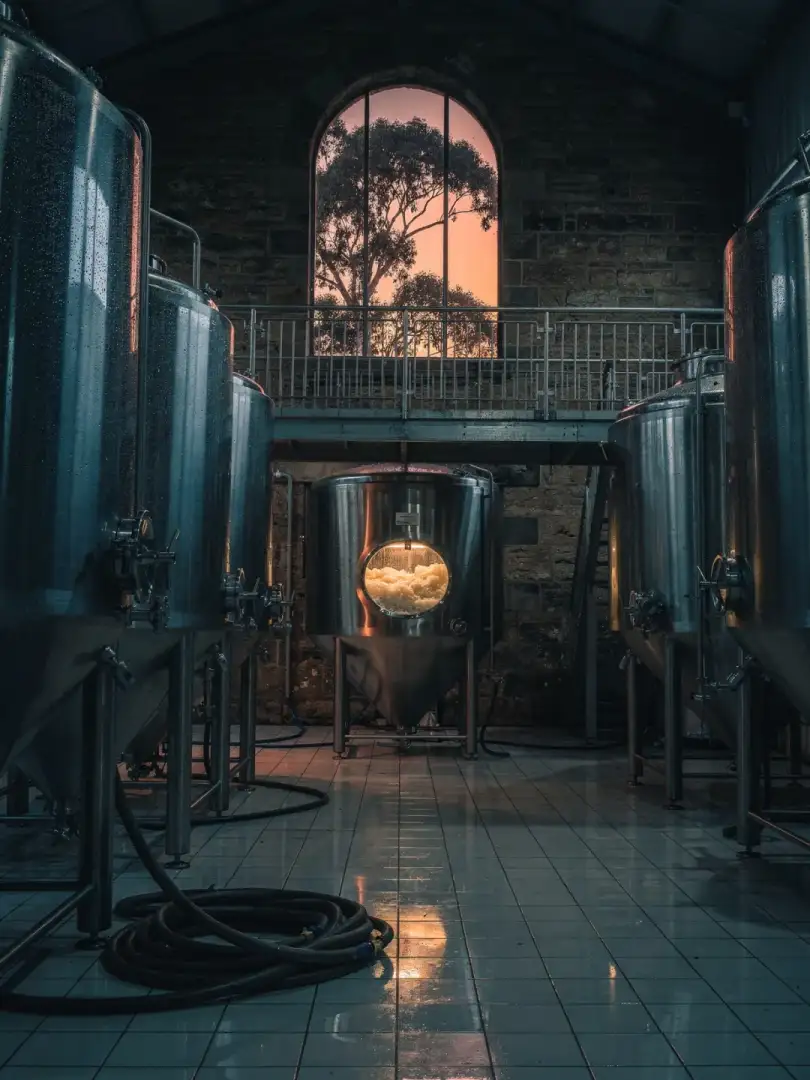
After primary fermentation, the beer matures in the lagering tank. It clarifies, the yeast settles out, and rough aromas round off. This takes longer for lager than for ale, often several weeks. Small operations like Two Metre Tall in the Derwent Valley, by contrast, brew farmhouse beers—that is, farm-style beers—with flavours of yeast and spice.