Barley in the North
Malt & Grain
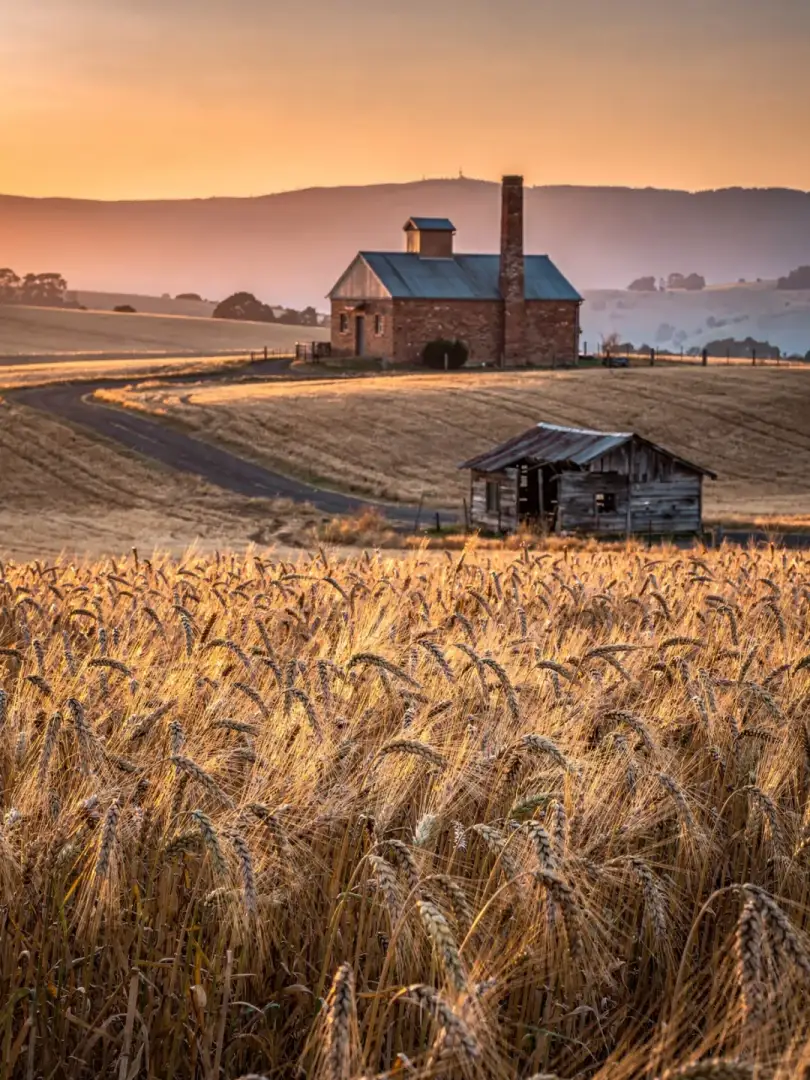
Barley is the foundation of every lager and every pale ale, and Tasmania grows its own. The fields lie mainly in the north and in the Midlands, the plateau between Hobart and Launceston. Cascade states that it uses Tasmanian barley and Tasmanian hops. That's a producer claim that can't be verified from outside.
Barley only becomes malt through malting. The grains are moistened until they germinate, then dried on the kiln. The kiln is a heated drying chamber, and its temperature determines the colour. Pale malt is dried gently; dark malt is dried hotter and longer.
Boag's also had its own malthouse. Under James Boag II, who took over management from his father in 1887, a new malthouse was built in Launceston. In the end, it's the barley variety and the kilning method that shape the flavour.
Pale lagers like the Premium Lager from Hobart and Launceston rely mainly on pale malt. It supplies the sugar for fermentation and a flavour of bread and biscuit. In Australia, cane sugar was long added to lager recipes too, to make the beer lighter and drier.
A pale ale like the Cascade Pale Ale uses somewhat darker malt. The relevant value is EBC, a colour scale where small numbers mean pale beer and large numbers mean dark beer. A stout adds roasted malt on top, which brings coffee and cocoa aromas. Dark roasted malts make up only a small part of the grain bill.