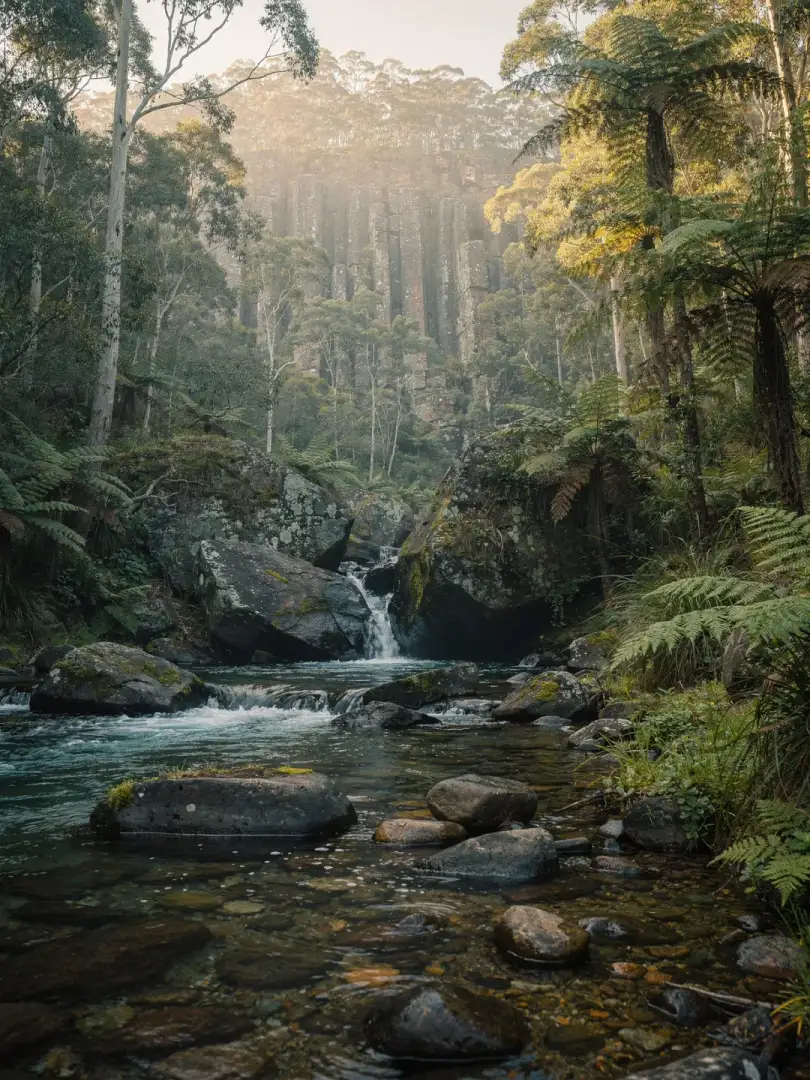
Meltwater from the Mountain
Water & Soil
Where does the water for Cascade come from? Straight from Mount Wellington, which towers over Hobart to the west and stands 1,271 metres tall. In winter, snow often caps the summit, and the meltwater collects in streams that flow down to the Hobart Rivulet. According to the brewery, Cascade still uses this mountain water today, via a system that Peter Degraves built in the 1830s.
Brewing water is more than just drinking water. The dissolved minerals, especially calcium and carbonate, help shape how a beer tastes. The measure for this is water hardness: soft water contains few minerals, hard water contains many. Rain and meltwater from mountains is usually soft.
Soft water makes hop bitterness taste milder and smoother, the kind of character you'd expect from a pale lager. A lot of sulphate in the water, on the other hand, emphasizes bitterness and makes the beer drier. So for a beer with gentle bitterness, a mountain that releases little limestone helps.
Mount Wellington is largely made of dolerite, a dark, hard igneous rock. It fractures into vertical columns, visible above Hobart as the Organ Pipes. On limestone, the water would turn harder; on dolerite, it generally stays softer.
Launceston, too, sits on water. The South Esk flows through Cataract Gorge, a ravine at the edge of town, before joining the North Esk to form the Tamar. Boag's brewed on the banks of the North Esk. The island's cool setting suits lager well, since bottom-fermenting yeast works best at low temperatures.