Warm-Fermented, Then Matured
Yeast & Fermentation
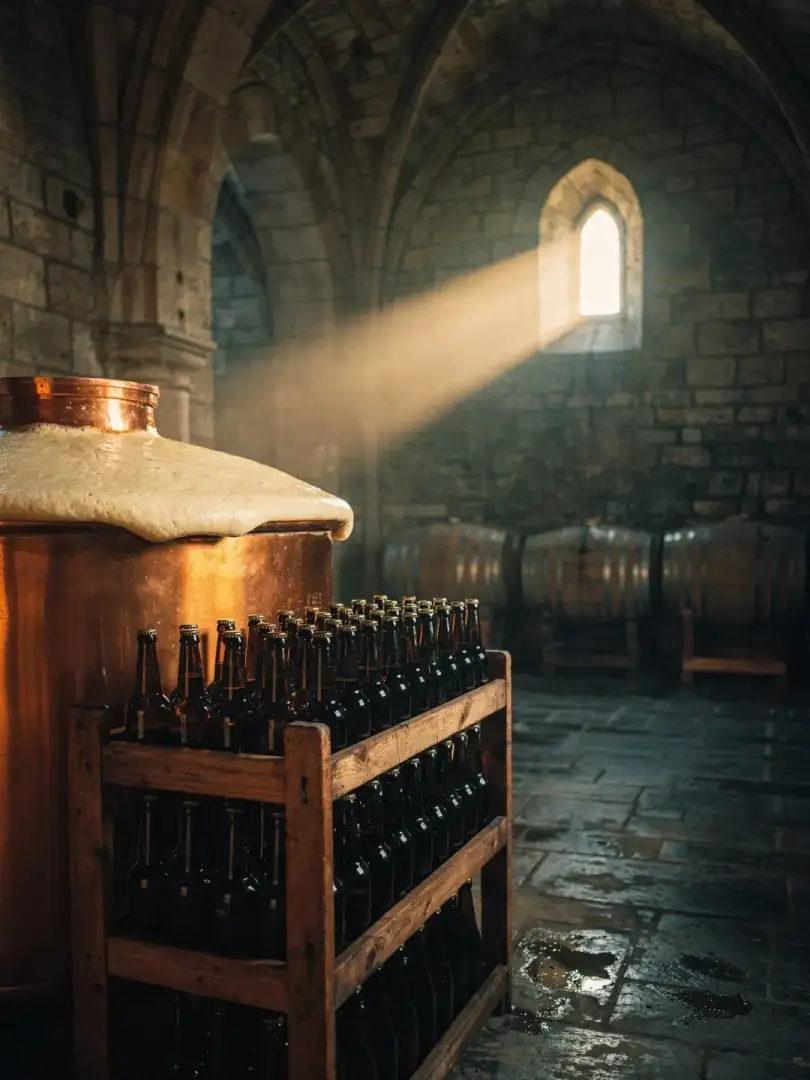
All the beers from this region are top-fermented. The yeast works at temperatures starting around 20°C (68°F), rising to the top of the vessel during fermentation and producing fruity esters and spicy notes absent from cold-fermented lagers. These warm fermentation temperatures are the source of the pear, banana, and pepper notes you taste in Belgian beer.
Rochefort works with its own house yeast strain, carefully guarded by the abbey. According to information available about the brewery, the recipes have remained essentially unchanged since the 1960s. The yeast thus serves as both a tool and a core part of the house style, passed down from batch to batch. In Rochefort, Dinant, and Achouffe, the same philosophy holds for fermentation: it cannot be rushed without changing the beer.
After primary fermentation comes a second round, which takes place right in the bottle. At bottling, a small amount of yeast and sugar remains in the beer; both continue to ferment inside the bottle, producing carbonation. A layer of yeast settles at the bottom of the bottle. When pouring, this sediment is usually left behind, as it clouds the beer and adds bitterness.
The stronger the beer, the longer it can be aged. A Dark Strong Ale with more than 9% alcohol by volume mellows in the cellar over months or years, as the sharpness of the alcohol gives way to a warmth reminiscent of port wine. Collectors report this effect with Rochefort 10, which the producer lists at 11.3% ABV.