Pilsner and Munich Malt
Malt & Grain
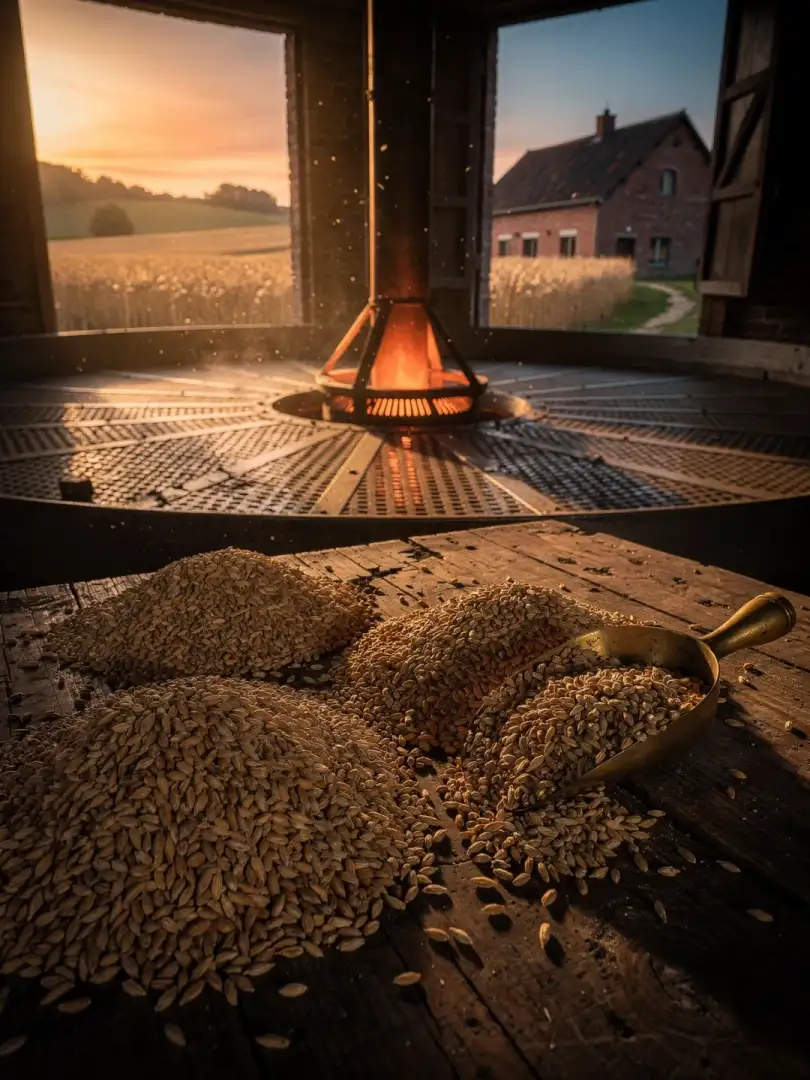
What makes an abbey beer dark, a Trappist beer round, and a blonde golden? Malt plays a major role. Barley is soaked, allowed to germinate, and then dried in a kiln, a heated drying chamber. The higher and longer the heat, the darker and sweeter the malt becomes.
According to information published about the abbey, Rochefort brews with Pilsner-type and Munich-type malts. Pilsner malt is pale and supplies most of the fermentable sugar. Munich malt is kilned more intensely, contributing color along with a hint of bread and raisins. Exactly how much of each goes into which beer is a secret the monks keep to themselves.
The style guidelines for a Belgian Dark Strong Ale call for a color of 24 to 43 EBC, a measure of beer color that sits around 8 for a pale lager. A Belgian Blond Ale falls between 8 and 12 EBC, a Tripel between 9 and 14. Rochefort 8 and 10 belong to the dark category, while La Chouffe and Leffe Blonde fall into the pale group.
La Chouffe adds a spice to the mix: the brewery describes its beer as spicy, with hints of coriander. This isn't malt but an ingredient drawn from Belgian brewing tradition, one that Germany's Reinheitsgebot generally keeps out of the glass. Mc Chouffe, its brown sibling, offers flavors of anise, licorice, and caramel. As a rule of thumb for dark beers: the more Munich malt—or even darker malt—used, the stronger the notes of bread, raisin, and caramel.