Fermented Warm, Finished Dry
Yeast & Fermentation
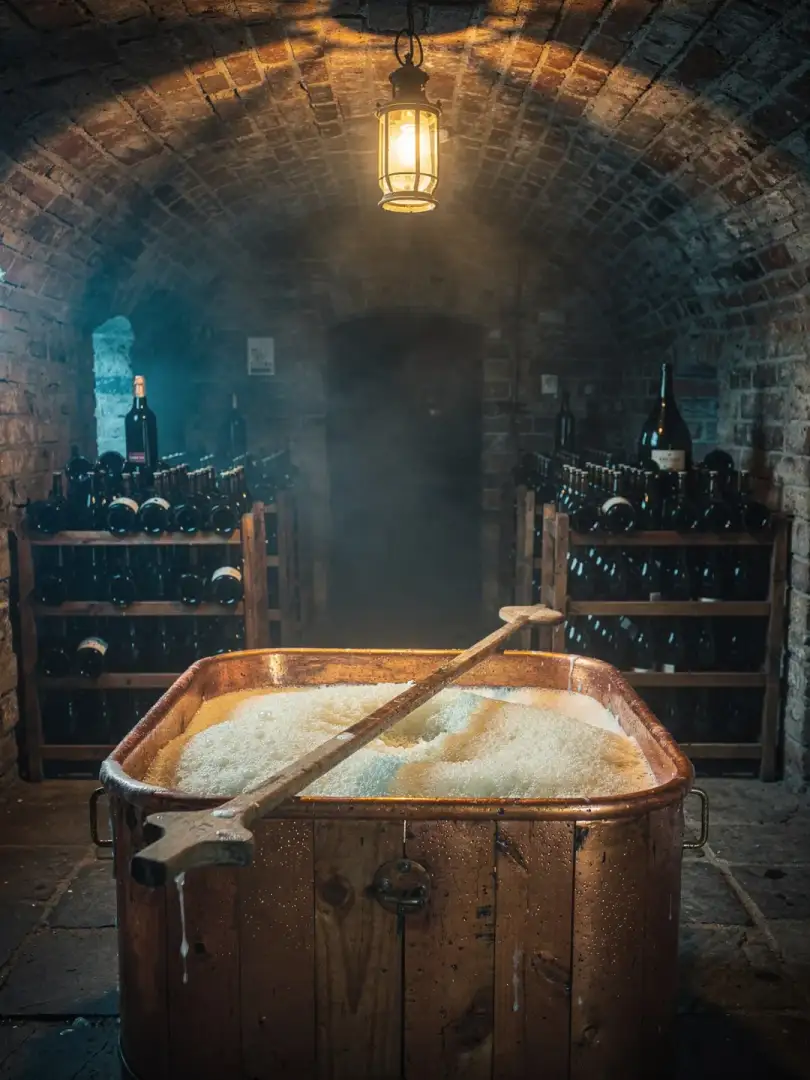
Why does a saison taste so spicy? Because of the yeast. Saison is top-fermented, meaning the yeast works at warm temperatures and collects at the top of the fermenter, and Hainaut is home to these farmhouse yeast strains. Every farm had its own strain, and each gave the beer a distinct character.
Brasserie Dupont's yeast is considered a benchmark. It ferments nearly all the sugar, which is why the beer is so dry, and it tolerates warmth that would weaken other yeasts. The result is a peppery, lightly fruity character that has earned saison its reputation as a spicy beer.
Dupont lets its beers referment in the bottle. A bit of yeast and sugar go into the bottle, and carbonation develops there over a few weeks of conditioning. The sediment at the bottom of the bottle is therefore intentional, not a flaw. Anyone wanting a clear beer should let the bottle stand for a while before opening it.
At Chimay, a different path was taken. According to the brewery, Father Théodore spent two years propagating different yeasts from single cells, testing fermentation and flavor. The goal was a yeast that handled alcohol well and produced clean aromas. The strain he found is, according to Chimay, still used unchanged today.
This explains the difference between farm and monastery. Saison is a winter brew from the farmhouse kitchen, while Trappist beer is a product with a fixed recipe, its yeast unchanged for decades. Both are top-fermented beers, yet their fermentation management differs: here wild and warm, there guided and controlled.