Bitterness and Aroma
Hops
How bitter is a saison? Judging guidelines put it at 20 to 35 bitterness units (IBU) — noticeable bitterness, but not sharp. It's meant to give the beer a dry finish, not to mask the spice and fruit the yeast contributes.
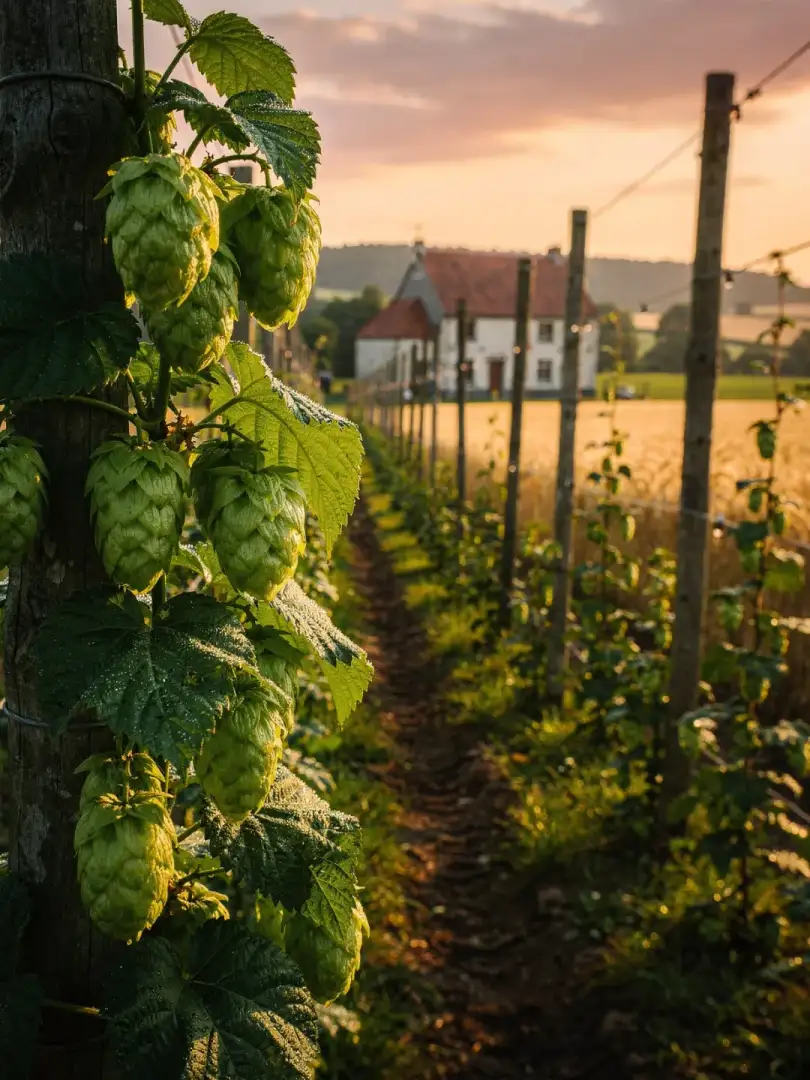
In the 19th century, the large farms of Hainaut grew barley and hops to brew beer for field workers. Each farm thereby gave its beer its own, earthy character, and it was simply taken for granted that ingredients came from one's own fields.
Hops do two different things. Boiled for a long time, they provide bitterness that balances the malt. Added late to the boil, or cold into the finished tank, they bring aromas of flowers, citrus, or herbs, but little bitterness. This second method is known as dry hopping.
Brasserie Dupont demonstrates this with its Saison Dry Hop. It's a Saison Dupont with the Styrian hop variety Styrian Wolf added cold. According to the brewery, this produces notes of grapefruit, blossom, and exotic fruit.
The counterpoint is a Trappist dubbel or tripel. There, yeast and malt are meant to take the lead, and bitterness stays in the background, balancing the sugar so the beer doesn't come across as sweet. A tripel reaches 20 to 40 bitterness units, a dubbel 15 to 25, yet both feel softer than a saison because the body is fuller.