Gruut Instead of Hops
Hops
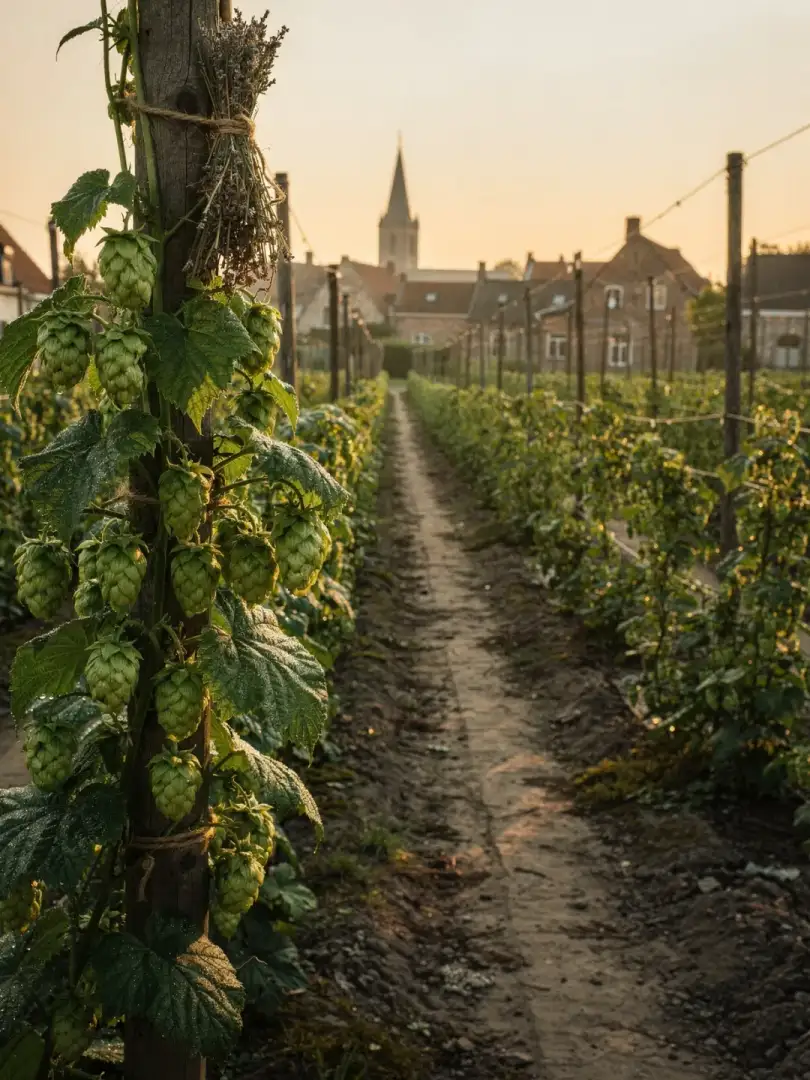
Hops aren't grown to any significant extent in East Flanders. Belgian hop cultivation is centered around Poperinge in West Flanders, and whatever hops local brewers need comes from there and other growing regions. There are no documented acreage figures, so none are given here.
Ghent is the fascinating case, because there the story runs in reverse. Before hops took over, beer was seasoned with "gruut," a blend of herbs and spices that provided bitterness and shelf life. The city brewery Gruut, founded in 2009 by Annick De Splenter, deliberately brews its beers with gruut instead of hops. The exception is its Tripel, which does contain hops.
What do hops actually do in beer? They supply bitterness that balances the malt's sweetness, along with aromas ranging from floral to herbal. Bitterness is measured in IBU, a scale for bittering compounds. The Oud Bruin style sits at 20 to 25 IBU—moderately bitter. Malt and acidity take center stage, with hops playing a supporting role.
The region's strong beers, by contrast, are markedly more bitter: the Belgian Golden Strong Ale style, which includes Delirium Tremens, ranges from 22 to 35 IBU by the book. In a beer this potent, bitterness keeps the sweetness in check—otherwise it would taste cloying.
Want to taste the difference? Compare a Gruut beer with a hop-forward Blond. The herbal beer tastes spicier and less sharp, with bitterness coming from a different plant altogether. For newcomers, this is a great way to learn that beer doesn't automatically have to taste of hops.