Blended and Aged
Yeast & Fermentation
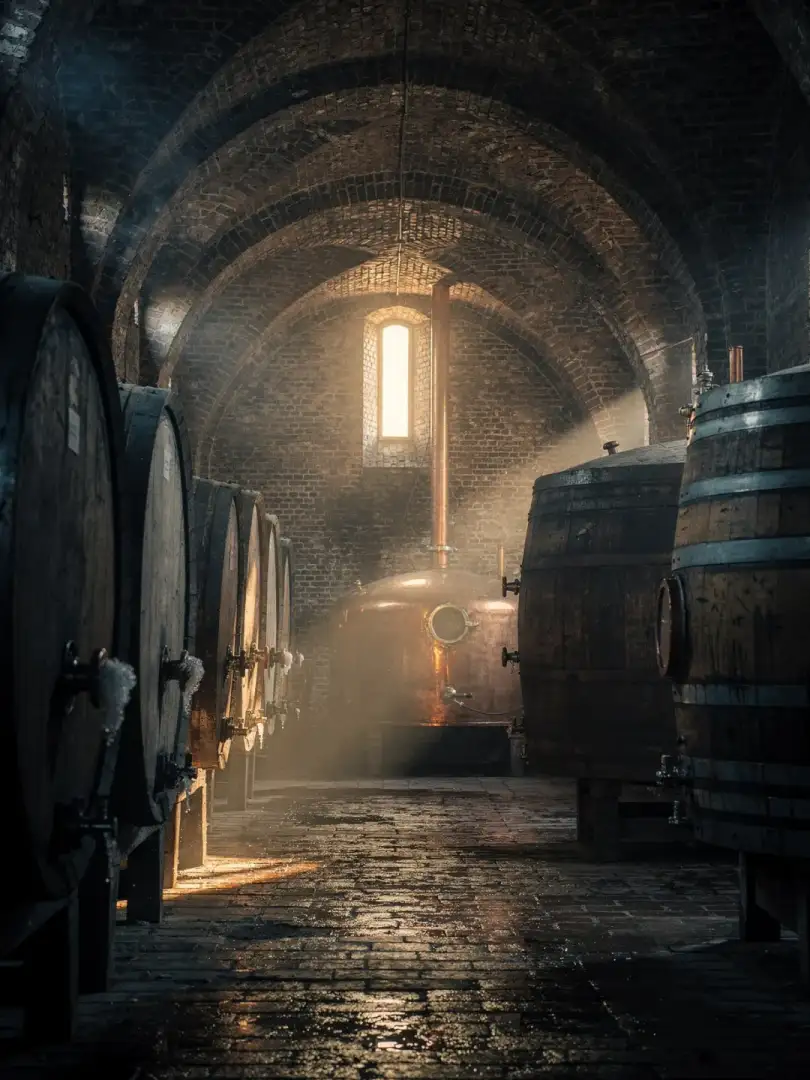
Oud Bruin is a mixed-fermentation beer. Yeast first converts the sugar into alcohol, then lactic acid bacteria get to work, producing a mild acidity. Secondary fermentation takes weeks to a month, after which the beer ages further in the bottle for several more months. All told, maturation can take up to a year—hence the name "old brown."
Many versions are blended after aging: an aged, sour beer is mixed with a younger, sweeter one. This softens the acidity and gives the bottle-conditioning yeast more sugar to work on. Goudenband from Liefmans is considered a well-known example of the style.
How does Oud Bruin differ from the red Flanders Red of West Flanders? Both undergo mixed fermentation. The Red is, by the book, somewhat weaker and drier, while Oud Bruin can come in noticeably stronger, ranging from 4 to 8% ABV.
With the strong beers, yeast is what counts. According to the brewery, Delirium Tremens is made with three different yeast strains that give the beer its character, and it's top-fermented. Top-fermented means the yeast works at warmer temperatures and floats on top, lending fruity aromas.
Kwak also ferments top-fermented style. Roman, on the other hand, chooses bottom-fermenting yeast for its Adriaen Brouwer beer: cool, slow, and clean in flavor. In this way, Oudenaarde itself demonstrates that brown doesn't automatically mean sour. In the end, it's the fermentation cellar that decides whether dark malt becomes a mild lager or a mature, lightly tart brown beer.