Chalice and Wine
Tasting
What does Flanders Red Ale taste like? The first sip recalls a cool, slightly sweet red wine with acidity. Rodenbach Classic is considered the entry point: mildly sour, with cherry and caramel. Rodenbach Grand Cru goes deeper—drier, more sour, and more pronounced in oak.
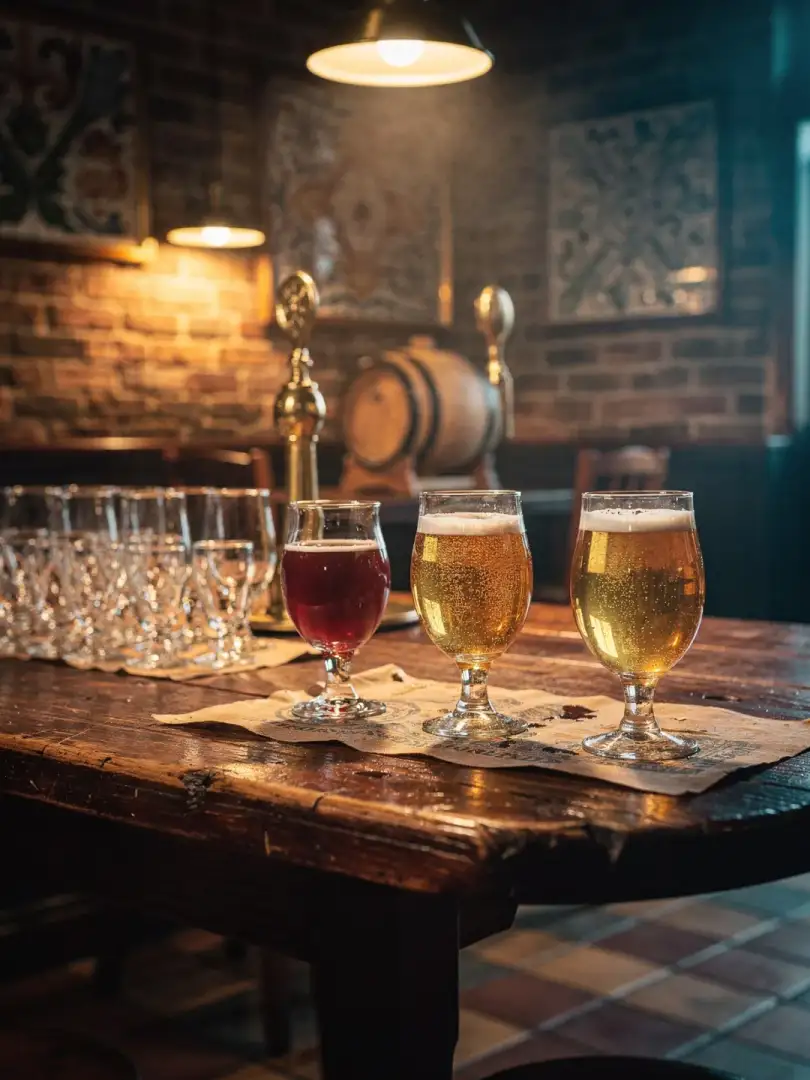
The glass can be a chalice or tulip glass, or a wine glass in a pinch. It concentrates the aromas of fruit, vinegar, and oak and leaves room for the reddish head, which collapses quickly. A pint or stein suits this beer less well, since it's meant to be sipped slowly.
Temperature: drink this beer ice-cold, and all you'll taste is acidity. At around 8 to 10 degrees Celsius—essentially cellar temperature—the sweetness and fruit notes come forward. When pouring, a gentle pour down the tilted glass helps, since carbonation is low.
Brugse Zot Blond, by comparison, feels almost like its opposite. It smells of banana, spice, and honey, tastes rounded, and is stronger than its golden color suggests. A tulip glass is worthwhile here too, since it lets the yeast notes unfold more fully.
Comparing the two is worthwhile. A sip of Rodenbach after the Brugse Zot shows just how differently West Flanders can taste: wood and acidity in one glass, yeast and spice in the other. Neither beer is better—they simply answer different questions.
Anyone trying Flanders Red for the first time should start with small sips. The acidity seems stronger at first than it really is, and it eases once the palate adjusts. After that, fruit, caramel, and oak open up, and the beer suddenly tastes softer.