Flatland, Leie, Wood
Water & Soil
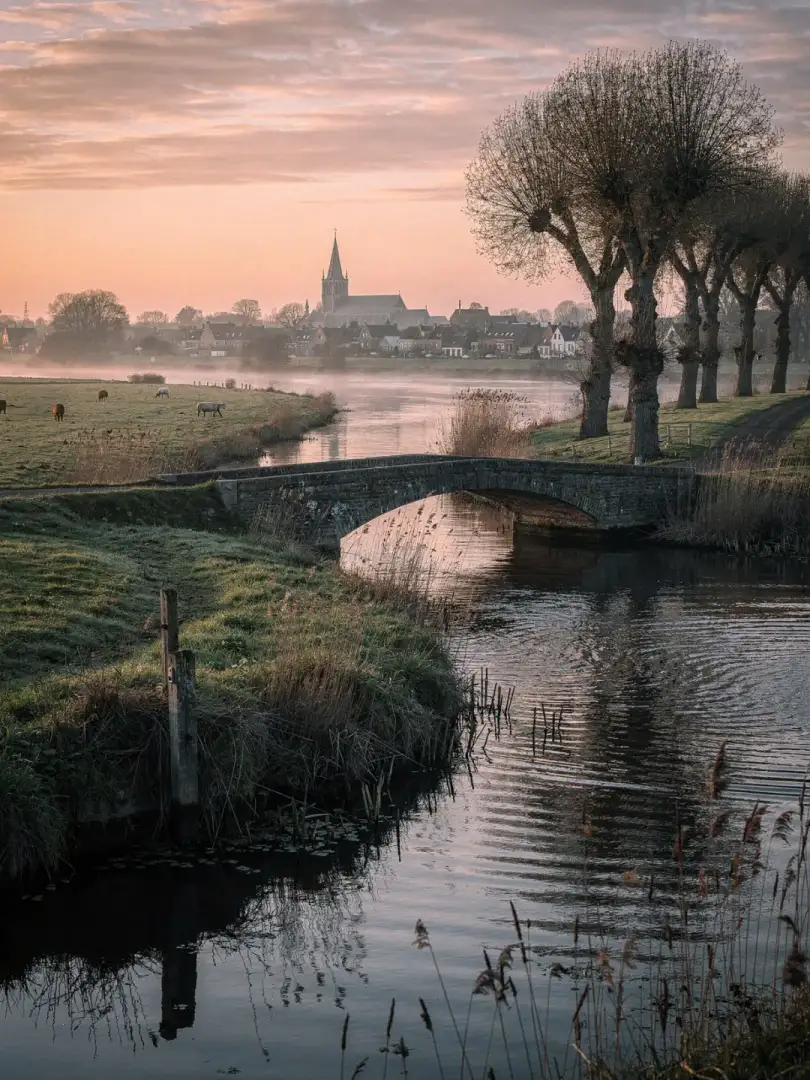
West Flanders is flat. Between Roeselare, Kortrijk, and the coast lie sandy and loamy soils, crisscrossed by canals and streams, and the sea brings mild, damp weather without extreme winters. There are no hills, rock formations, or limestone springs here to give the beer its character.
Still, this matters. While Pilsen is famous for its soft water, the flavor of a Flanders Red Ale depends hardly at all on the brewing water. The acidity doesn't come from the water, but from fermentation and from the wood. The soil plays more of a role for the grain and for the vegetables that later land on the plate.
The Leie flows past Kortrijk. Its water was once used for retting flax, which is why the river is known as the 'Golden River' of the linen town. It's not a source for brewing water, but it explains why this area lived off water for centuries—just not off hops.
The actual place of aging is the hall. At Rodenbach, according to trade sources, 294 foeders stand side by side—oak barrels taller than a person, in which the beer rests for at least two years. Wood is never fully airtight: traces of air seep in through the staves, and that's exactly what mixed fermentation needs.
The hall is therefore both brewing tool and cellar at once. It keeps yeast and bacteria alive within the wood, sometimes for decades, giving each foeder its own character. No barrel tastes like its neighbor, and the brewer later blends them the way a chef combines ingredients.