Vienna Malt, Caramel
Malt & Grain
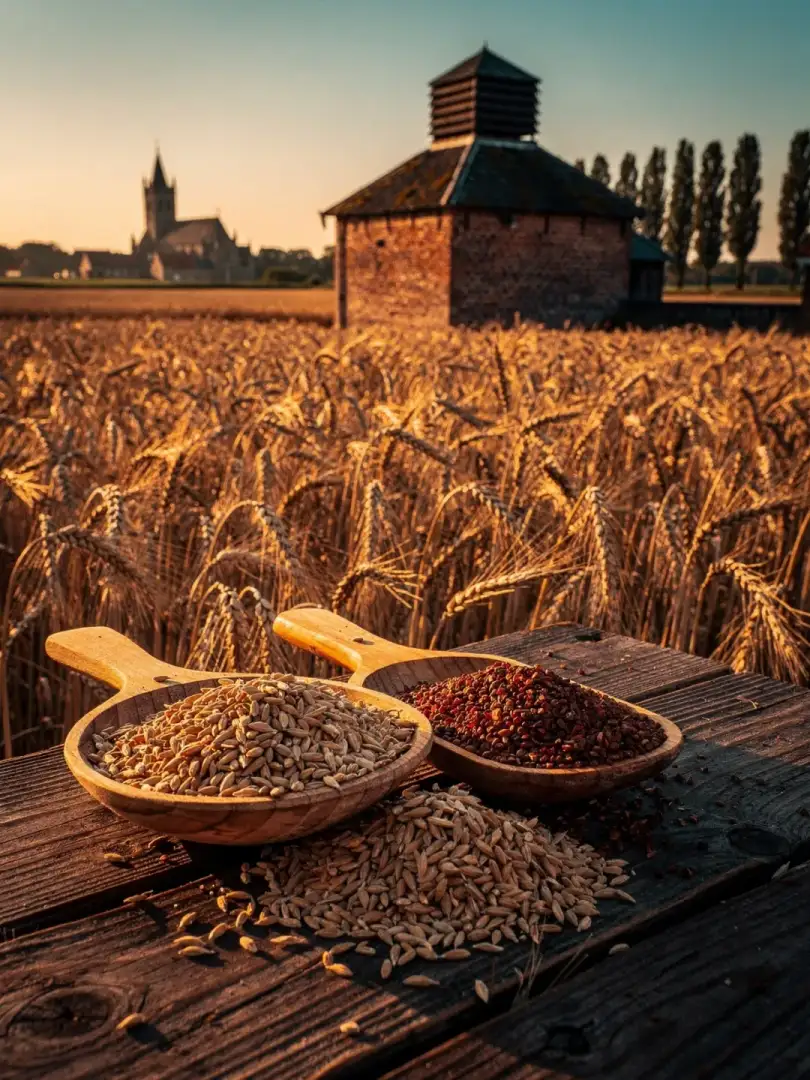
Why is Flanders Red Ale red? The color comes from the malt. The BJCP style guidelines describe Vienna and Munich malt as the base, with a touch of caramel malt and sometimes corn. This results in a reddish-brown color of about 20 to 33 EBC—darker than a Helles, but far lighter than a stout.
Vienna malt is produced on the kiln, the malthouse's roasting oven, at a higher temperature than pale pilsner malt. It smells of fresh bread and biscuit and brings sweetness along with it. That sweetness matters, since it later balances the acidity from the foeder.
Caramel malt is barley malt heated moist in the oven until the sugar in the kernel caramelizes. It contributes raisin and toffee aromas. Anyone smelling a Flanders Red might catch a hint of prune or sherry and suspect wine in the glass; in fact, it's barley.
Corn is considered a traditional ingredient in Flemish beers. It lightens the body without adding extra color. Whether a brewery uses corn depends on the recipe—the style guidelines leave it open.
Because the style relies on lactic acid bacteria, it needs malt that holds up over time. Fuller, more dextrin-rich malts still provide sugar for the microbes even after months in the wood. So the malt isn't just a backdrop—it's fuel for the second, slow fermentation.
Brewing itself begins the same way everywhere: crushed malt is mashed in with hot water, the sugars dissolve, and the clear wort runs into the kettle. What's new comes only afterward. A portion of the sugars is deliberately left unfermented, forming the reserve that the wood's microbes will later feed on.