Bottle Conditioning
Yeast & Fermentation
The Trappist beers of the Westhoek are top-fermented. Top-fermenting yeast works at warmer temperatures, usually between 18 and 25°C, producing fruity esters — aromas of banana, pear, or plum. In a Pilsner, that would be considered a flaw; here, it's part of the character.
A strong wort needs time. With Westvleteren 12 and St. Bernardus Abt 12, the beer stays in the tank longer than a pale lager would before bottling. This gives the yeast time to build up high alcohol without turning harsh, and lets the aromas round out.
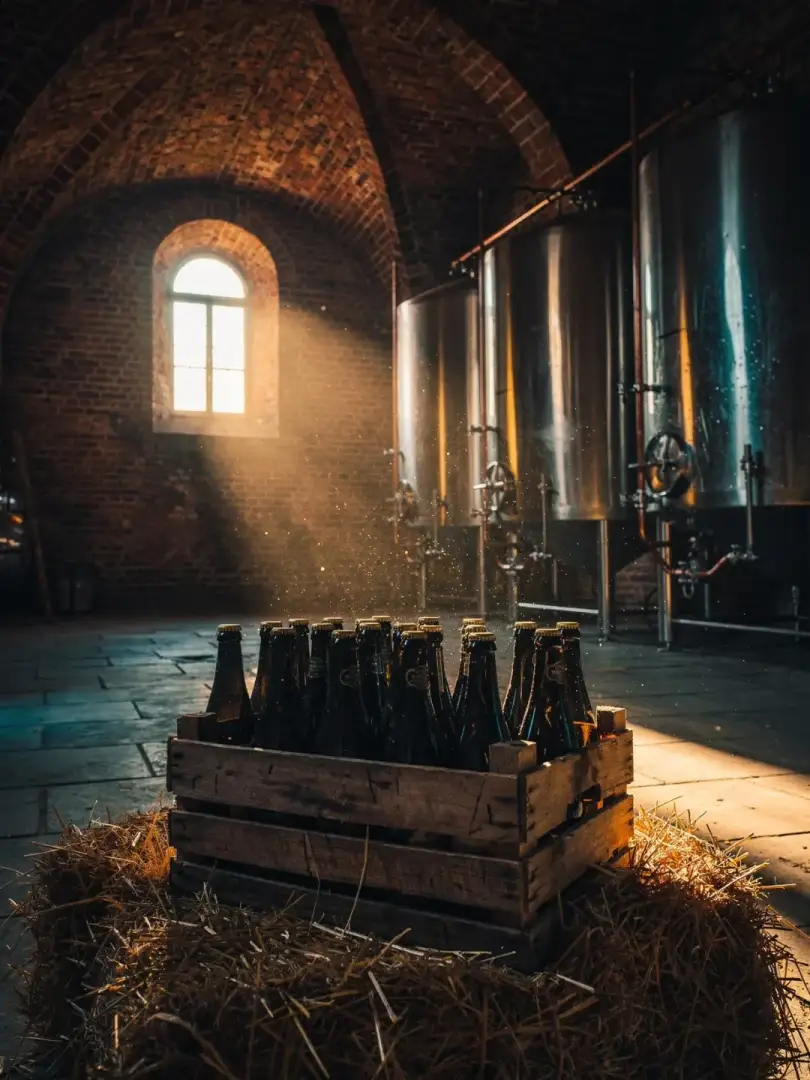
Then comes the signature step: bottle conditioning. Before bottling, fresh yeast and a bit of sugar are added, and inside the sealed bottle, carbonation forms naturally all over again. A thin layer of yeast sediment settles at the bottom. A beer this robust can keep maturing in the bottle for years afterward.
Why does this recall wine? Because the beer ages in the glass in a similar way: fresh, it tastes fruity and bold; after a few years, it mellows, with more raisin, port, and spice. Brewers call this cellaring potential, and for strong Belgian beers, it's considered entirely normal.
In practical terms at the pour, that means: pour slowly and leave the sediment in the bottle. It tastes tart and yeasty and clouds the beer. The yeast is harmless and even delivers vitamins, but it noticeably changes the flavor. If you want to try it anyway, pour it with the last sip, ideally tasted separately from the clear beer.