Cool and Warm
Yeast & Fermentation
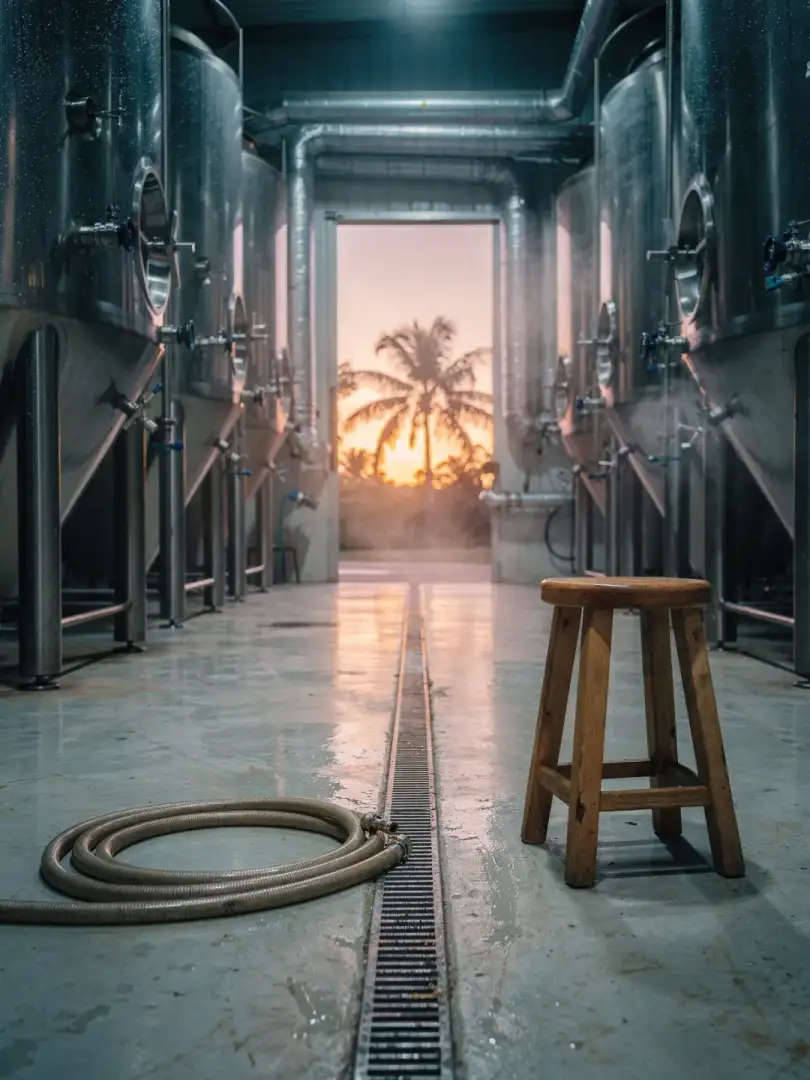
During fermentation, yeast converts the sugar from the malt into alcohol and carbon dioxide. For draft Chopp, the big breweries use bottom-fermenting yeast, which works at low temperatures and produces a clean, lean beer. In the tropical interior, though, this cold costs energy, since even the fermentation cellar has to be chilled.
Colorado lists German yeast for the beer Cauim. This fits the image of a clear, clean lager with Bohemian hops. For the beers Indica and Demoiselle, top-fermenting yeast is the natural choice, since India Pale Ale and Pale Ale are classic ale styles. Top-fermenting yeast ferments warmer and brings more fruit and spice into the glass.
How long the beers age depends on the style. A lager needs weeks of cold storage, during which the yeast settles and the beer clears. An ale is usually ready faster. No figures from the region's fermentation cellars are published, so any timeframe given here should be read as a style-based guideline, not a recipe from any specific brewery.
That this can be done without a brewery and without cultivated yeast at all is shown by the history of Cauim. In Tupi villages, as many accounts describe it, women chewed cassava, and the saliva broke the starch down into sugar. The mixture was then left to ferment in vessels. It was a beer without malt, but built on the same principle.
Today, yeast gives every beer in the region its signature. A clean lager-style Chopp from the Pinguim tastes different from a Colorado Demoiselle with coffee, and fermentation accounts for much of that difference. It determines whether fruit and spice come to the fore or whether the beer stays plain and clear.