From Europe
Hops
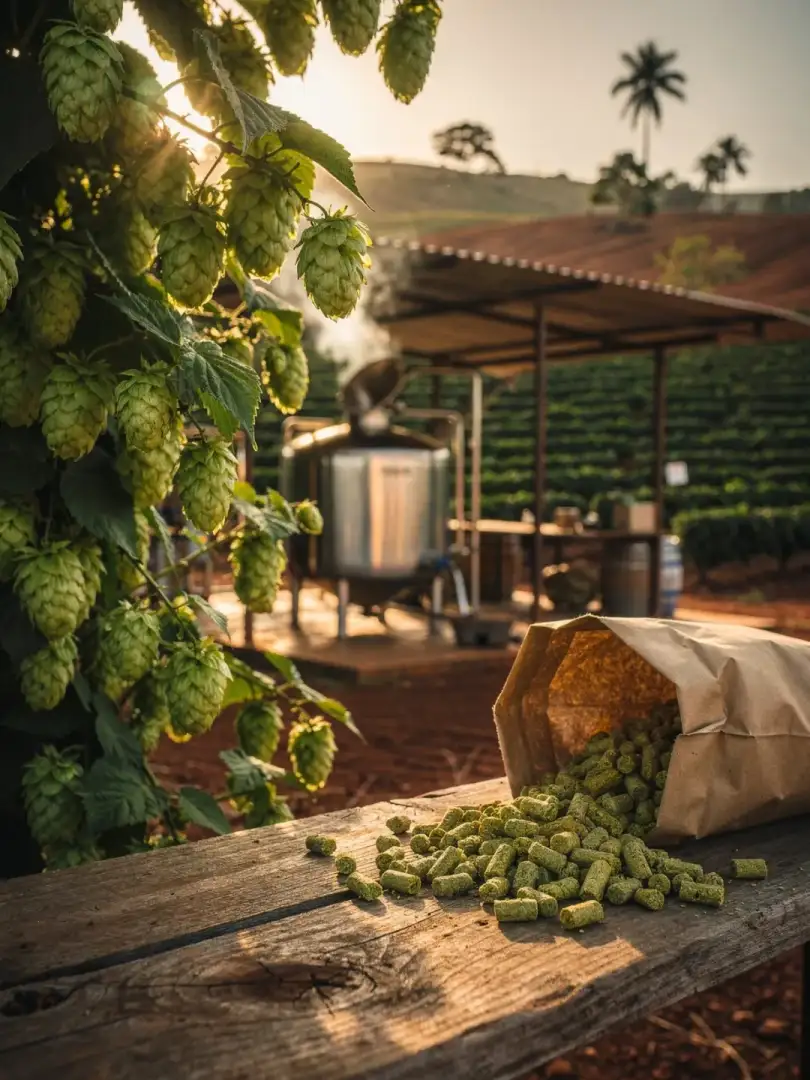
Does hops grow in Ribeirão Preto? Hardly, since the plant loves long summer days and a cold winter, and the tropical interior has neither. Breweries in the region source their cones from Europe and North America, usually as pressed pellets, which store and ship well.
For the beer Cauim, Colorado lists Czech hops. It's a deliberate choice, since hops from Bohemia are considered fine and spicy, and they don't push a beer into harsh bitterness. It suits a recipe that already brings plenty of character on its own, thanks to a sweetish root like cassava.
Hops serve two roles in beer. They add bitterness so the malt's sweetness doesn't feel cloying, and they contribute aroma and flavor. Experts measure bitterness in IBU, International Bitterness Units, a value for the quantity of bittering compounds in a beer. The higher the number, the more assertive the drink feels.
An India Pale Ale needs a particularly large amount of this. The beer Indica is brewed in the style of the English export beers once shipped to the colonies in India. Here, there's a Brazilian twist too, with rapadura offering something round to counter the hop bitterness.
The simplest proof of the hops is your nose. Hold a freshly poured Colorado beer under your nose, and you'll smell the hops first, even before the malt. With old-school Chopp, by contrast, the hops stay in the background. They're meant only to leave a light note on the finish, keeping the drink thirst-quenching.