Sandstone & Basalt
Water & Soil
Beneath Ribeirão Preto lies a vast underground reservoir. The Aquífero Guarani, one of the largest freshwater deposits on Earth, stretches beneath large parts of South America, and the city draws much of its drinking water from wells sunk into this sandstone. Sandstone acts like a slow filter, so the water emerges clear and cool from the depths.
How hard a brewery's water is depends on the particular well. Hardness refers to the level of dissolved calcium and magnesium salts, and it influences whether a beer comes across as soft or crisp. As everywhere, each brewery treats its water to suit the recipe, either lowering the hardness or adding salts deliberately.
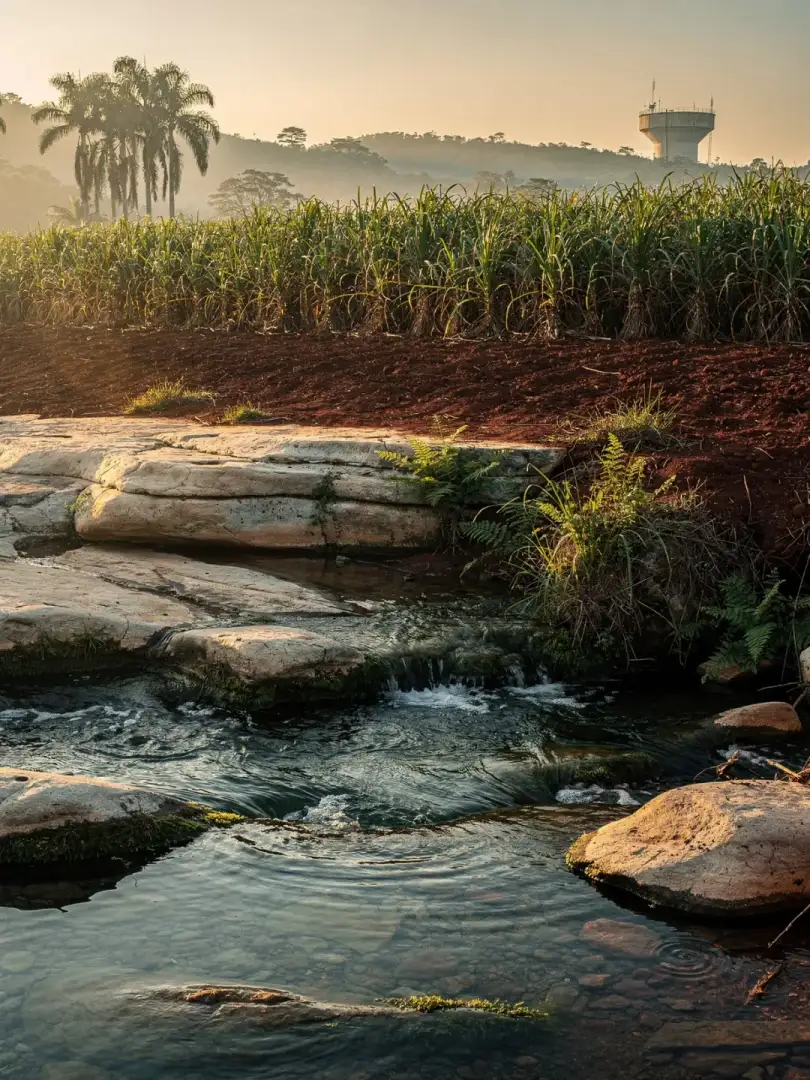
Every Brazilian knows the local soil as terra roxa, a red, iron-rich earth formed from ancient basalt flows. Sugarcane grows on it, the crop that earned Ribeirão Preto the nickname "California of Brazil," and on it thrive the coffee plants of the Alta Mogiana, which Colorado uses for its Demoiselle beer.
The climate sets limits on storage. You won't find a cellar dug into a hillside that stays naturally cool here. Beer only stays cold if someone actively cools it, which is why cold rooms, cold chains, and ice-chilled tap systems are a fixed part of beer culture in the interior.
That's also why Chopp at the Pinguim is served so the glass fogs up with condensation. The cold compensates for what the tropical heat outside demands of the beer. At thirty degrees Celsius in the shade, a lean, crisp beer simply tastes better than a warm, heavy one.