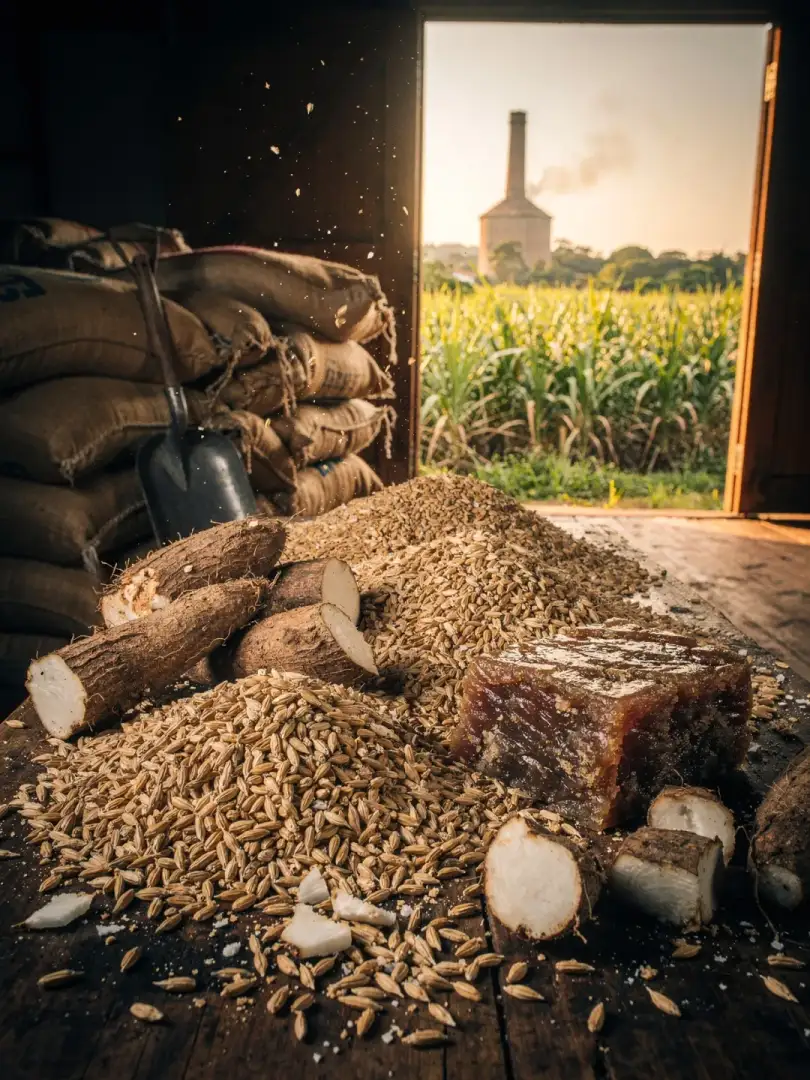
Barley, Corn, Cassava
Malt & Grain
Barley is a crop of Brazil's south. It barely grows in the fields of São Paulo state, and a large share of the brewing malt the country consumes is imported. Colorado lists Brazilian-malted barley malt for its Cauim beer, combined with additional malts sourced from abroad.
Malt is grain that's been soaked in water and allowed to germinate so its starch later converts into sugar. It's then dried and roasted in the kiln, a hot drying oven. The longer and hotter this process, the darker the malt becomes, and the more it tastes of bread, caramel, or coffee.
Alongside malt, Brazilian brewers like to work with raw fruit, meaning unmalted grain or roots as an additional starch source. In mass-market lagers, this is often corn, which makes the beer lighter and paler. The best-known raw ingredient in Colorado's lineup is mandioca, which goes into the mash together with the malt for Cauim right from the milling stage.
Cauim is a word from Tupi, the language of a large share of the indigenous peoples along the Brazilian coast. It was the name of an old fermented drink made from cassava and grain, once drunk at festivals in many villages. Colorado borrows the name for a modern beer that shares nothing with the original beyond the ingredient itself.
Sugar, too, can be part of the recipe. In the beer Indica, Colorado uses rapadura, the firm, dark raw cane sugar made from the region's sugarcane. It adds fermentable sugar to the beer while leaving behind a hint of molasses and caramel. In São Paulo state, this raw material is practically right outside the door.