Bitterness in the Rainforest
Hops
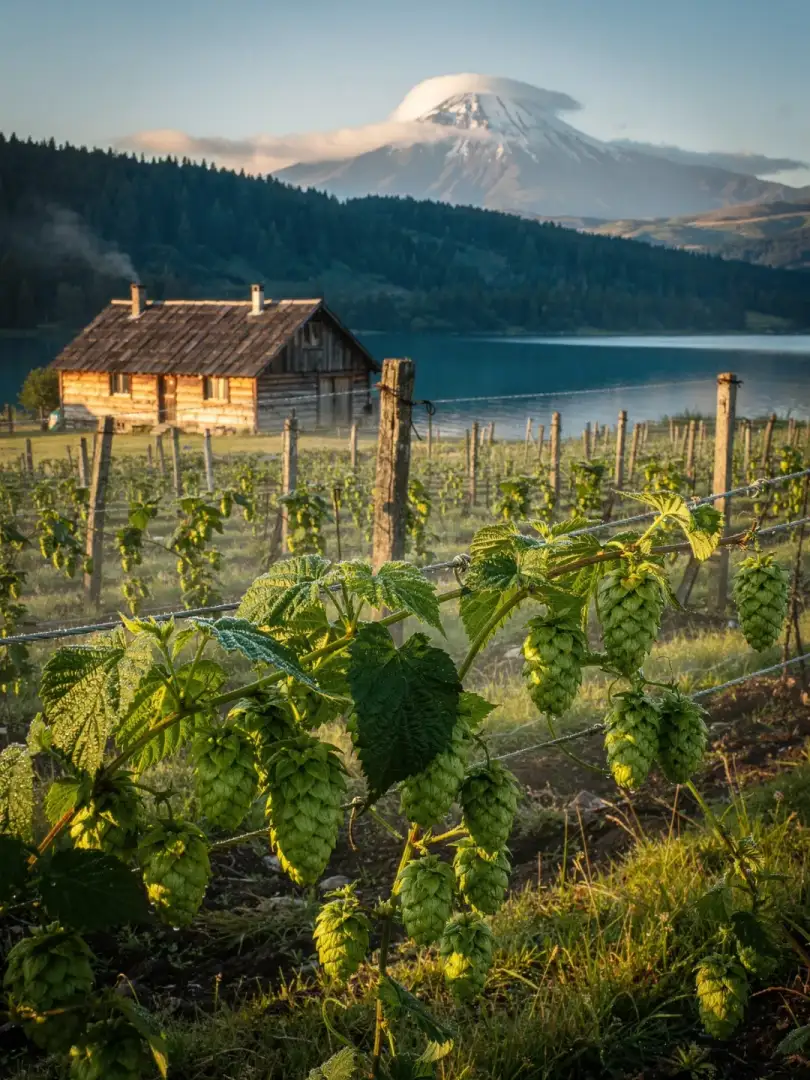
Hops give beer its bitterness and, depending on the variety and timing of addition, also aromas of herbs, flowers, or citrus. Chile isn't a major hop-growing country, but interest is growing in the south. In the Los Ríos region, one operation specializes in hop cultivation.
The Anwandter brewery was already consuming enormous quantities in the 19th century. The company history records 30,000 kilograms in 1889, 35,000 in 1898, and 60,000 kilograms in 1914. At an annual output of 25 million liters, that works out to just over two grams of hops per liter.
How bitter a beer tastes is measured in IBU, International Bitterness Units. A pale lager often falls between 16 and 30. A robustly hopped ale can sit well above that. The hops are boiled in the wort, and the alpha acids released from the cones give the beer its bitterness.
Brewers after aroma add the hops late in the kettle or dry-hop the beer afterward. This dry-hopping preserves the volatile aromatic compounds that would otherwise evaporate during boiling. It's exactly this technique craft brewers worldwide use when brewing a Pale Ale or an IPA.
Valdivia has no hop-growing region of its own so far. The small-scale cultivation in Los Ríos hints at where things might be headed, but it's nowhere near enough to supply entire breweries. The Cervecería Anwandter in Valdivia likely never relied on hops from its own land alone — such quantities came from distant growing regions.
The fact that hops reached Valdivia at all shows how closely the city was tied to world trade. A river port and ships from Europe made it possible to source a raw material that for a long time barely grew in the cool south of Chile.