Cellars Beneath Valdivia
Yeast & Fermentation
Beer is created when yeast converts the sugar in the wort into alcohol and carbon dioxide. Depending on the yeast and the temperature, very different beers emerge. That's why brewers prefer to talk about lager and ale rather than pale and dark.
Lager yeast works cool, usually between seven and thirteen degrees Celsius, and sinks to the bottom at the end of fermentation — hence "bottom-fermenting." The beer then matures cold in the cellar for weeks. The result tastes clean, crisp, and without much fruitiness.
Ale yeast works at higher temperatures, often between fifteen and twenty-two degrees Celsius, and rises to the top — hence "top-fermenting." It produces more fruit esters, aromatic compounds reminiscent of pear, apple, or banana. Many small Chilean breweries favor ales for this reason, since they don't require elaborate cooling equipment.
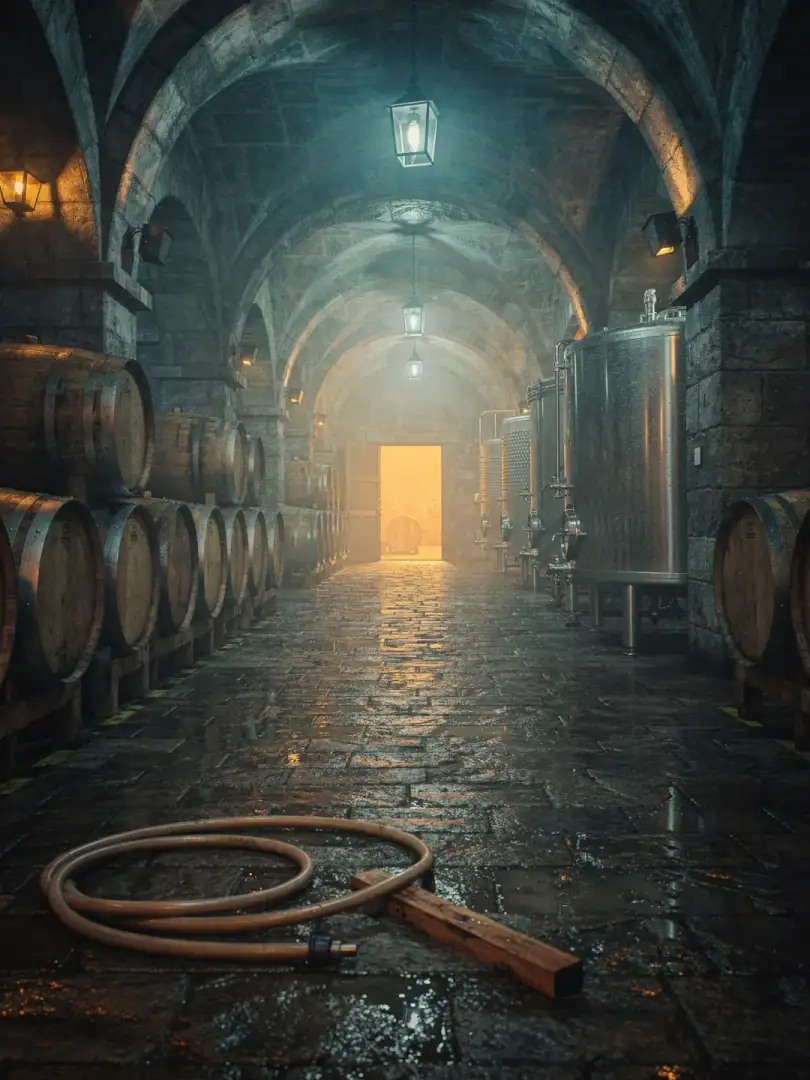
The Anwandter brewery relied on aging cellars in the 19th century. After 1912, it had nine underground cellars with a capacity of six million liters of beer. The chambers lay beneath the site and held the cold before refrigeration machinery existed in every brewery.
Today, stainless steel tanks with cooling jackets have replaced the vaults. The principle remains the same: the colder and longer a lager matures, the rounder its flavor becomes. Exactly how long is something breweries usually keep to themselves, since timing is part of the recipe.
Anyone joining a brewery tour at Kunstmann in Valdivia sees exactly this technology today: gleaming tanks, cooling coils, and pipes instead of brick vaults — but the same task at hand, namely letting yeast work at just the right temperature.