Fermented Cold
Yeast & Fermentation
Harbin Beer and Snow are bottom-fermented lagers. That means the yeast works at low temperature and sinks to the bottom at the end. It belongs to the species Saccharomyces pastorianus, a hybrid of two yeast species that wasn't scientifically described until centuries after its use in beer. The first pure culture was achieved in 1883 by Emil Christian Hansen at the Carlsberg laboratory in Copenhagen.
Lager yeast ferments cool, typically from a few degrees above zero up to just under ten degrees Celsius, and takes longer than a top-fermenting yeast. The result is a clean beer without fruity side notes. That is exactly the impression big brands want: the same everywhere, recognizable everywhere.
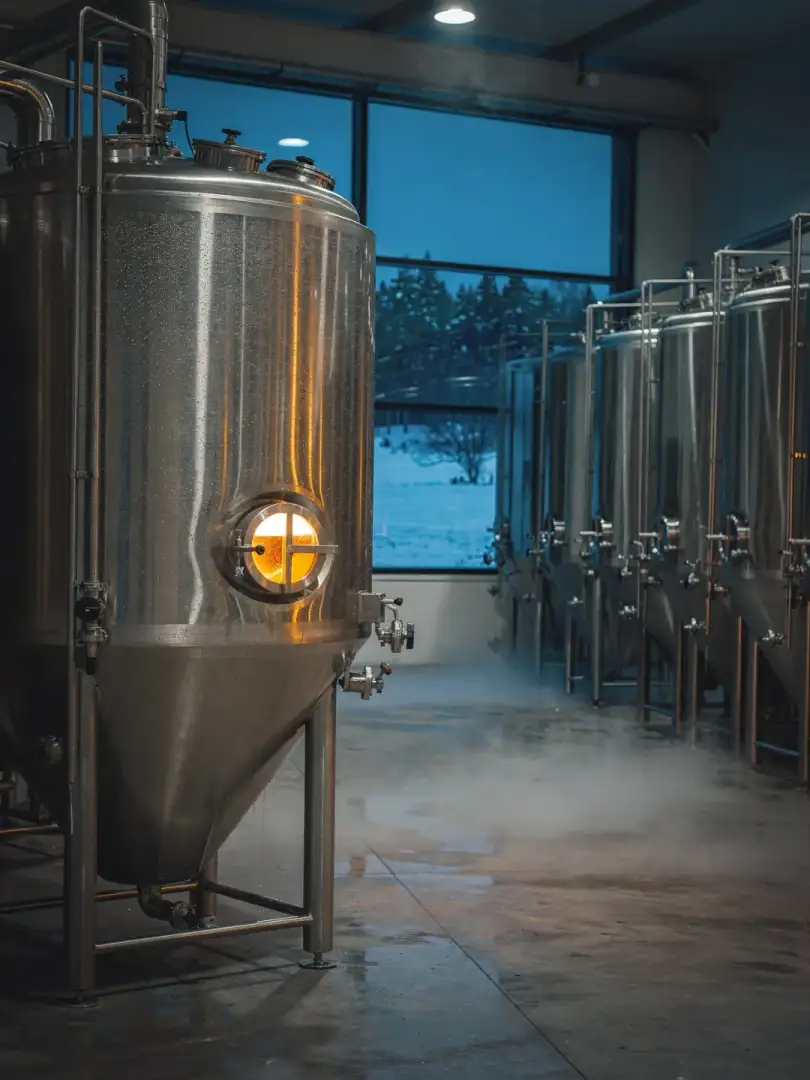
After primary fermentation comes lagering. The beer rests cold in tanks for several weeks, the yeast settles out, and unwanted compounds like diacetyl, the buttery flavor, break down. In industrial brewing, this step is controlled by time and temperature; there are no wooden casks or mountain cellars involved.
In Harbin, the surrounding cold plays only a minor role, since operations run on modern refrigeration. What's more interesting is the origin of the method: Bavarians and Bohemians had been bottom-fermenting for a long time, and with industrialization this method spread around the world, including to northern China.
At the end, the beer is filtered to make it bright, then bottled. Anyone opening a beer in Harbin gets a product that, in technique and yeast, is closely related to Pilsner and Munich-style lagers, just leaner, milder and cooler in character.