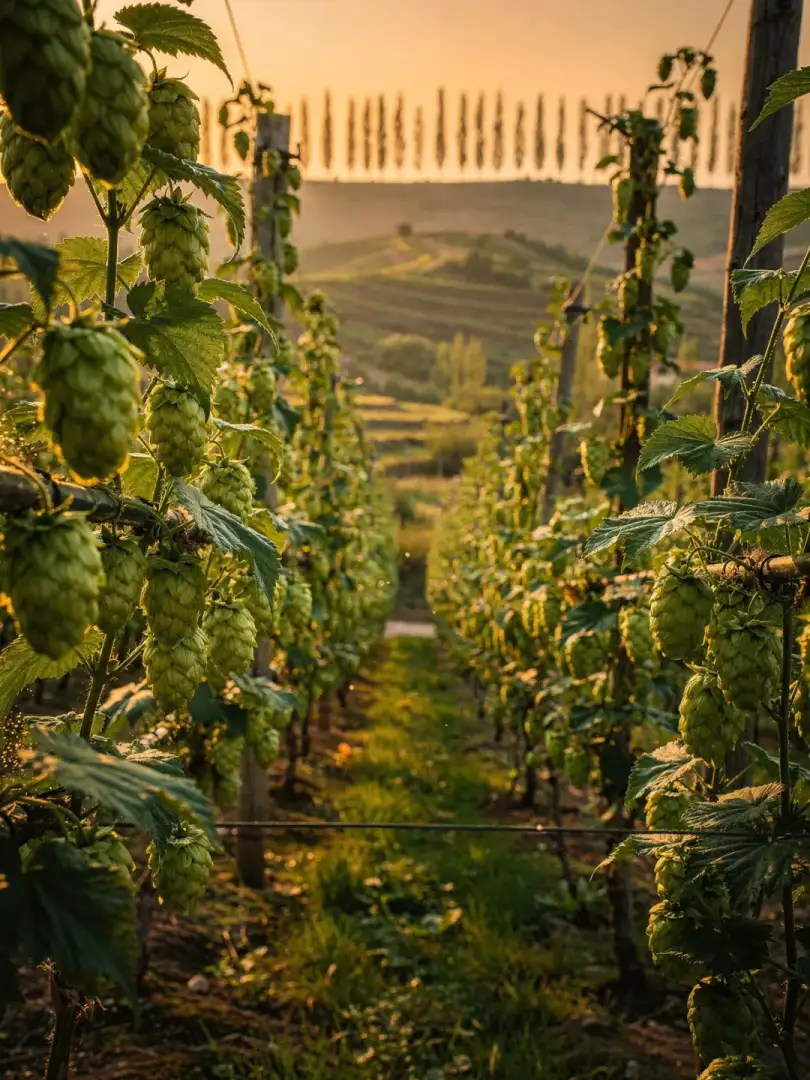
Imported Hops
Hops
With hops, the situation is similar to barley. For decades, China has imported hops and brewing barley from around the world, from Europe, Australia, Canada and Argentina, because domestic production couldn't keep pace with the growth of the beer market. Which varieties go into any particular Harbin beer, the companies don't disclose.
How much hop character a pale lager can take is shown by the BJCP guidelines. For international pale lagers, it cites 18 to 25 bitterness units, or IBU for short, a measure of how bitter a beer is. A German Pils lies above that at 22 to 40 IBU, a Bohemian Pilsner noticeably higher still at 30 to 45.
The difference is easy to taste: in a Harbin Beer, the hops stay in the background. The bitterness is brief, the aroma delicate, a grassy or floral hint without the sharpness known from a North German Pils. This makes the beer approachable for people with no experience of bitterness.
Hops have two jobs here. Boiled early in the kettle, they provide bitterness that balances the malt's sweetness. Added late or even after fermentation, they bring aroma. In pale lagers from large breweries, the first job predominates, fulfilled with a few easily calculable hop products.
For the role of hops in the northeast, the rule is: few bitterness units, added early. What developed over centuries in a hop-growing region like the Hallertau is here simply a matter of the supply chain.