Barley & Rice
Malt & Grain
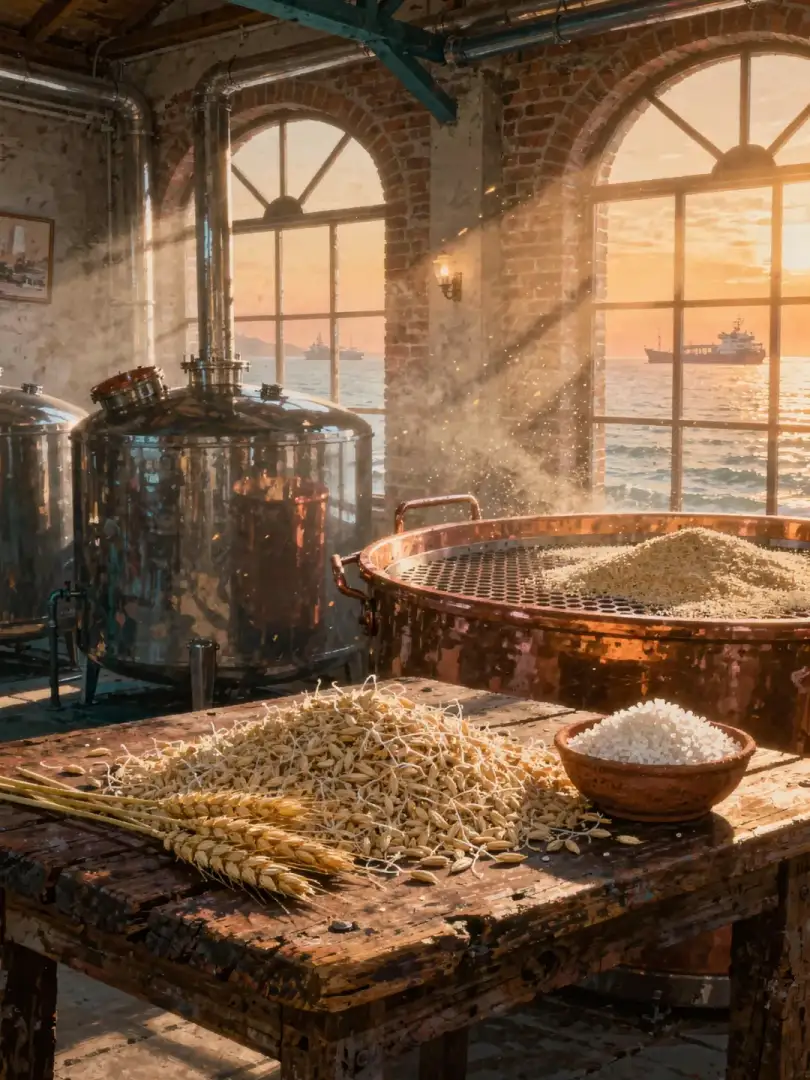
Barley malt forms the backbone of Tsingtao beer too, though it isn't used alone. According to the brewery, malted brewing barley comes from Australia, Canada, and France, along with rice from western China. The rice is an adjunct, as it's called in English, replacing part of the malt.
Why rice? It provides fermentable starch but almost no protein and no color. This makes the beer paler, drier, and lighter than one brewed from barley malt alone. This is a widespread tradition across Asia, in Japan as much as in Korea and China, and many beer drinkers there prize exactly that smooth, lightly sweet character.
Malting means letting barley germinate and then drying it. In the process, the grain develops enzymes that later convert starch into sugar in the mash tun. For pale lager, the malt is kilned gently, dried at low heat, so it stays light in color and tastes of bread and biscuit rather than roast.
So it's no secret that Tsingtao's raw materials travel a long way to get there. The brewery is among the largest in China and buys malt on the world market, where quality and price are renegotiated every year. The barley harvest of any single region therefore shapes this beer far less than it would at a small country brewery.
The Germania Brewery already had this principle in its playbook back in 1903, when it brewed a beer in the Pilsner style in Kiautschou. In the glass, the result shows as pale gold with a light sweetness from the malt and a body that never turns heavy. Rice and malt behave here like two ingredients that sand down each other's rough edges.