Laoshan & Coast
Water & Soil
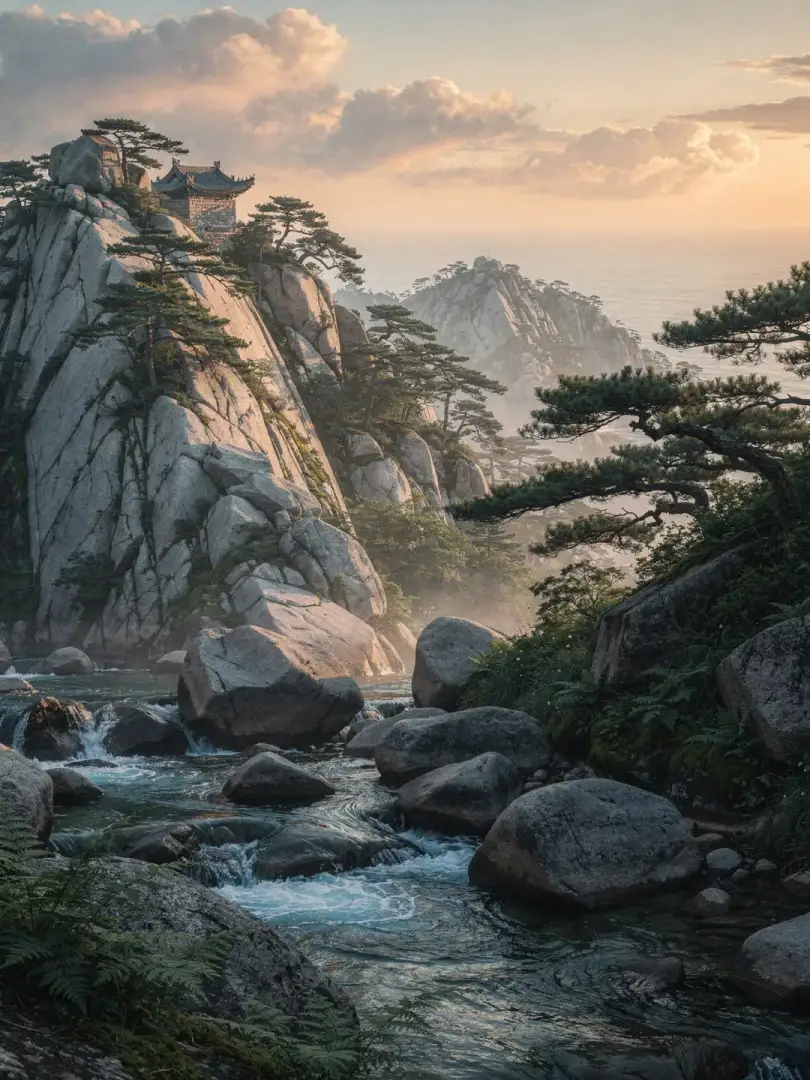
What water is Tsingtao beer brewed with? According to the brewery, it comes from springs at Laoshan, the granite range east of the city that rises steeply from the Yellow Sea. The mountains are made of granite, a hard rock low in minerals, through which rainwater picks up only a few salts. The brand markets this spring water as part of its story.
What soft water does for beer is well understood: it lets the hop bitterness come through gently, while very hard water makes it sharper-edged. A beer that glides cool and smooth across the tongue fits that profile well.
Laoshan has a reputation all its own in China. Mineral water from the mountains is bottled and sold across the country, and the range is also known as a site of Daoist monasteries. That the German brewers went looking for water here of all places in 1903 is a story the brand still likes to tell.
Qingdao sits by the sea, and that shapes the beer-drinking life here more than any terroir. Summers are humid and warm, winters cool, and the breeze off the water blows through the streets. Beer-garden weather is practically a constant from June through September here, which explains why the beer is built to be drunk cold and in quantity.
Rock-cellar lagering like you'd find in Franconia or Bohemia is out of the question here. The Germania Brewery was conceived as a lager brewery on the European model, and such operations were already using mechanical cooling back then. Today the cooling runs entirely on technology. The rock of Laoshan supplies the water, but the cellar itself is a setup of steel and piping.