Aroma from Overseas
Hops
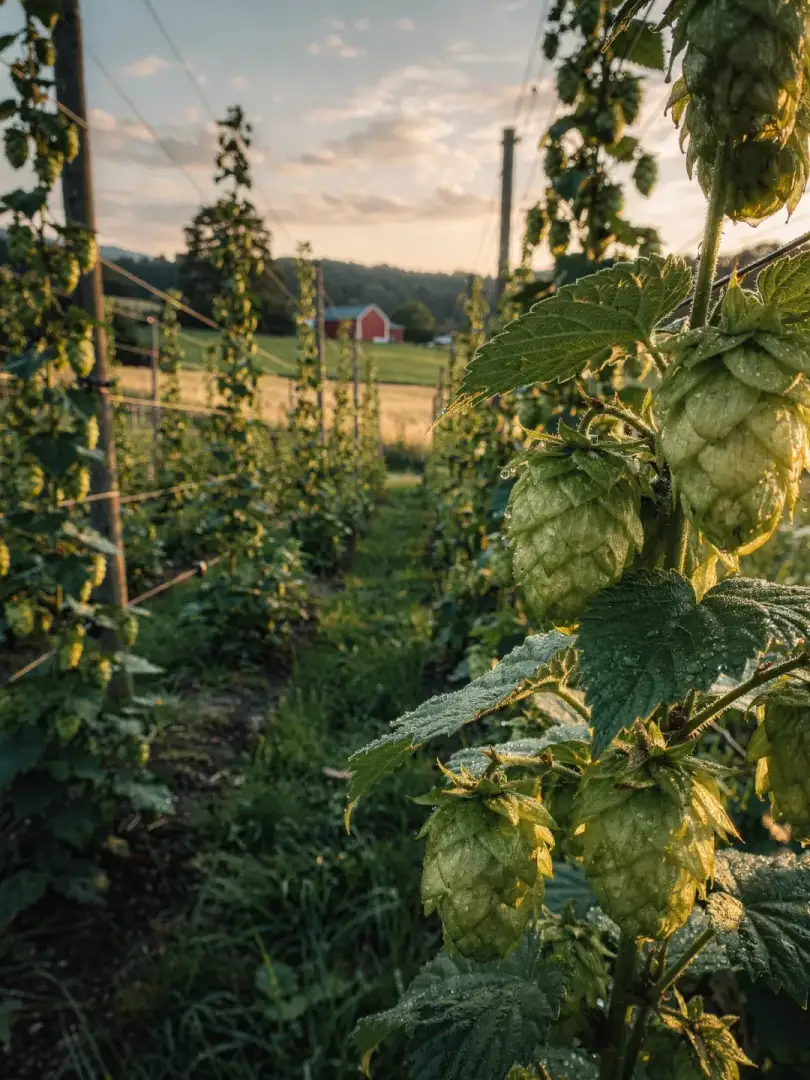
Does hops grow in Denmark? Not in any quantity that factors into a brewer's purchasing plans. Breweries around Copenhagen source their hops from the major growing countries, whether as fresh cones, pellets, or extract. Germany reported 18,962 hectares under hop cultivation in 2025, the US 17,057 hectares.
Hops give beer two things. The alpha acids in the cones provide bitterness, balancing the sweetness of the malt. The essential oils bring aromas of flowers, grass, citrus, or resin. Which effect dominates depends on the variety and the timing of the addition.
For a Carlsberg-style lager, classic aroma hops are the fit. Varieties like Hallertau Mittelfrüh or Saaz give the beer a delicate, herbal aroma and a bitterness that stays in the background.
Craft brewers work quite differently. Mikkeller is known for heavily hopped beers, especially India Pale Ales made with American varieties like Citra or Mosaic. They smell of mango, grapefruit, and berries, and their bitterness runs noticeably higher than a Danish pilsner's.
Dry hopping often comes into play as well. This involves adding hops to the beer after fermentation, without boiling. It preserves the aroma without significantly raising the bitterness.
On a visit to Vesterbro or Nørrebro, the difference is easy to taste. A Danish pilsner is hopped quite mildly, while a craft-scene India Pale Ale puts hops front and center.