Barley and Protein
Malt & Grain
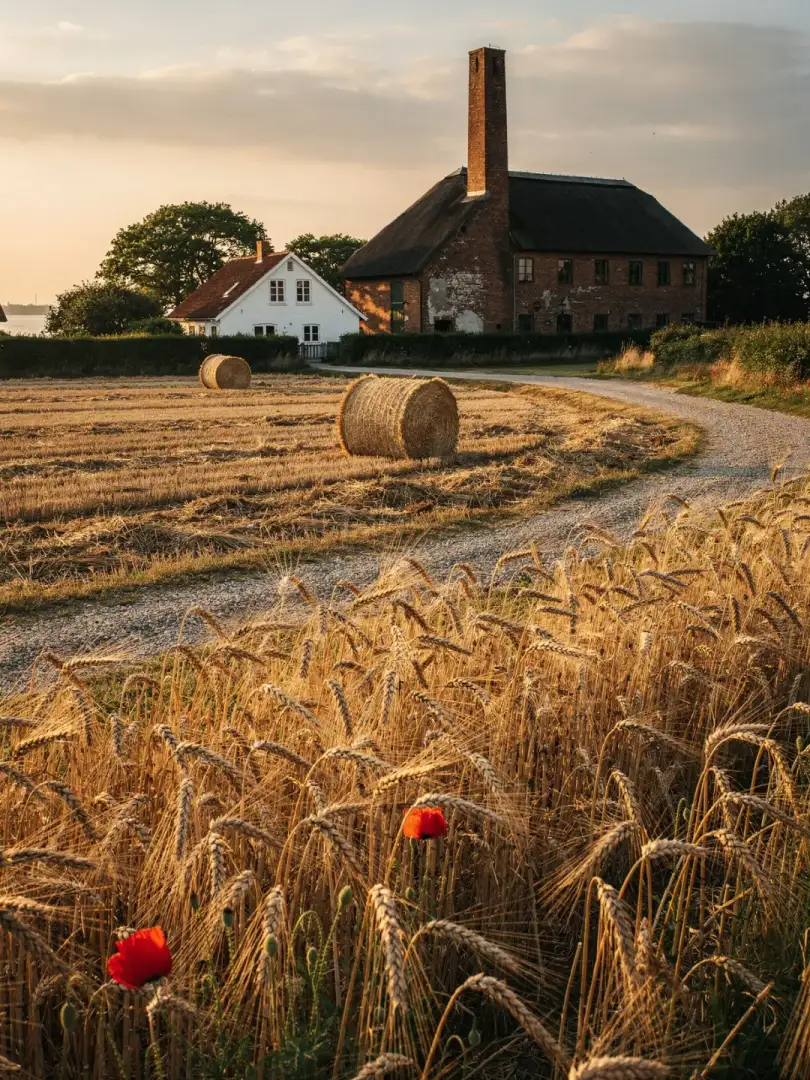
What grain is Danish beer brewed from? Barley, as it is almost everywhere. It grows across large areas of Denmark, and Copenhagen's breweries either buy it as finished malt or have it malted to order.
Malting means moistening the grain, letting it germinate, then drying and kilning it. This converts the starch in the kernel into sugar that yeast can later ferment. The hotter the kilning, the darker and more intense the malt tastes.
For the pale lager brewed by Carlsberg and Tuborg, lightly kilned pilsner malt is essential. It gives the beer its golden color, a gentle sweetness, and a flavor reminiscent of fresh bread.
The Carlsberg Laboratory also played a role in brewing barley. In 1883, chemist Johan Kjeldahl developed a method there to measure the nitrogen—and thus the protein content—of grain. For brewing barley, this remains a key metric today, since too much protein can cloud the beer.
Craft brewers at Mikkeller and Nørrebro Bryghus reach further into the malt bin. For robust stouts, they use heavily roasted malt that tastes of coffee and chocolate, often paired with oats for a fuller body. Mikkeller's Beer Geek Breakfast is an oat stout that also contains coffee.
Denmark has no purity law for beer. Sugar, fruit, spices, or coffee are all permitted ingredients. Whether a brewery uses them is a matter of style, not legal restriction.