Clay, Sandstone, Cellars
Water & Soil
Anyone driving into the Aischgrund notices the water first: pond after pond, drained in autumn and refilled in spring. The subsoil explains why. Layers of sand and clay lie on top of one another, and the clay holds the water that would otherwise seep away.
Exactly which water each brewery uses, and how hard it is, is best answered by the breweries themselves. There are no reliable shared measurements for the region as a whole. What's certain is that nearly every brewery today treats its water, either softening it or adjusting it with mineral salts. Water shapes the style less than it once did.
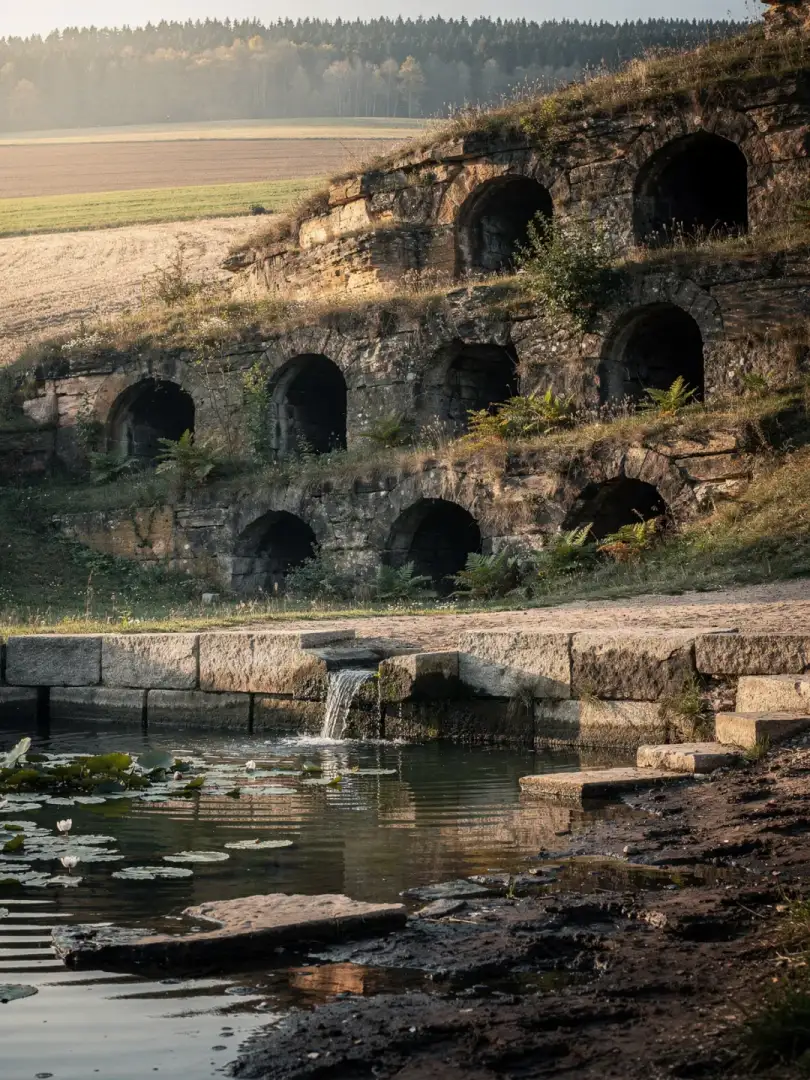
The stone matters more here. The rock cellars of the Aischgrund lie in the lee of the Steigerwald and were mostly carved into the sandstone in the mid-19th century, into burgsandstone, rhaetic sandstone, or iron sandstone, depending on the location. They served not only beer but also cider, fruit, and vegetables.
The Höchstadt Kellerberg is considered the prime example. According to the town, it has 26 entrances and 218 cellars, built on multiple levels into the rock. Inside the stone it stays cool even at the height of summer, which is exactly what a bottom-fermented beer needed, brewed to completion in March and kept fresh all the way into autumn.
This explains why Kellerbier found its true home here of all places. It wasn't born from a recipe idea but from a landscape where rock, winter frost, and many small brewers all came together. In Höchstadt an der Aisch, you can still see it today: walk up the hillside and find door after door set into the stone, each one leading to its own storage chamber.