Barley, Kiln, Caramel
Malt & Grain
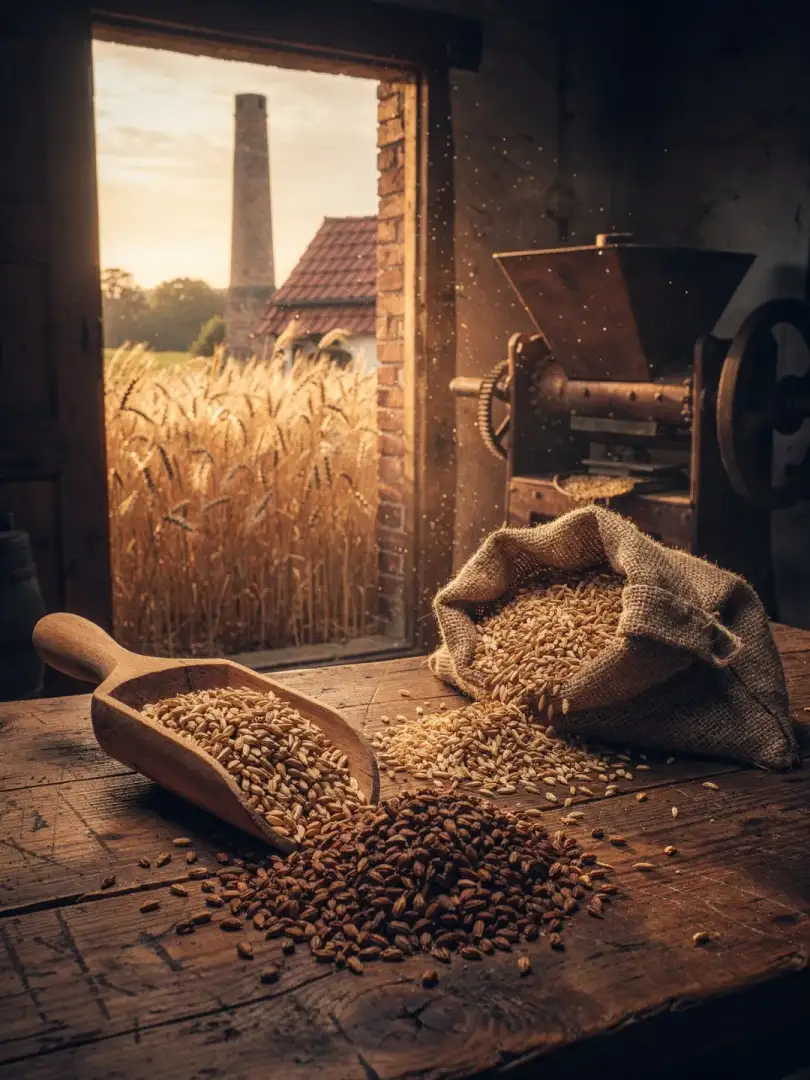
A Kellerbier tastes of its malt long before you notice the hops. Malt is grain, usually barley, that's allowed to germinate and is then dried. In the kiln, the heated drying chamber, heat determines the color: lower heat gives pale malt, higher heat gives darker malt.
For the region's bottom-fermented beers, the Reinheitsgebot (Purity Law) applies in its strictest form. Only barley malt, hops, yeast, and water are permitted; in Bavaria this also applies to top-fermented beers without added sugar. The small country breweries generally don't operate their own malthouses; they buy their malt in.
In the pale Kellerbier, a soft, bready malt character takes center stage, much like a classic Helles. In the dark version, it's roastier, more caramel-driven notes. Beer review sites describe the dark Kellerbier from Höchstadt as malty with a light sweetness and only moderate bitterness, and that's exactly the intended character.
Wheat beer is the exception to barley. Brauerei Heller in Herzogenaurach offers a "Karpfen Weisse" in its lineup, in which wheat malt makes up part of the grain bill. Because it's top-fermented, it's also permitted to contain other types of malt under German beer law.
How a batch comes together can be read in the malt itself. During mashing, soaking the crushed malt in warm water, the starch is released and converted into sugar. Yeast later consumes this sugar, turning it into alcohol and carbon dioxide. The more sugar present in the wort, the stronger the resulting beer, and this is exactly what the original gravity indicates.