Weizen Glass and Stein
Tasting
What does a Rieser Weizenbier taste like, and what should you pay attention to? The glass is tall and slender, wider at the top to give the foam room. First comes the aroma of ripe banana and clove, then a soft first sip with subtle sweetness, and finally the lively carbonation. It's barely bitter at all. The yeast gives the beer a full, almost creamy body.
A Weißbier is best enjoyed well chilled, at around six to eight degrees Celsius. Warmer, it quickly turns heavy; colder, it numbs the aromas. When pouring, tilt the glass and let the beer run down the side. Toward the end, straighten the glass upright. Swirl the remainder in the bottle so the yeast ends up in the glass too.
Several houses serve as examples for the region: Brauhaus Riegele from Augsburg with its range of beers, Hasen-Bräu from the city, and the pale Hefeweizen from Maierbier in Nördlingen. The Rieser Weizen from Ankerbrauerei still exists as a brand, now brewed at Fürst Wallerstein Brauhaus. The descriptions here serve as taste examples, not recommendations.
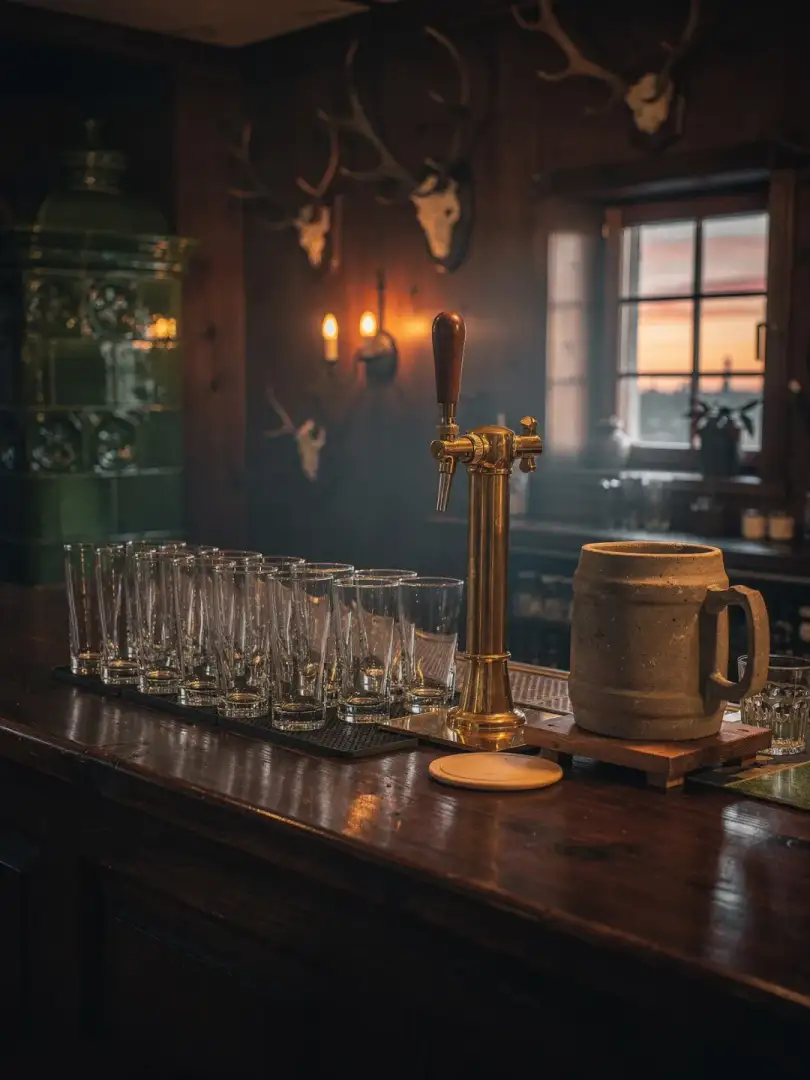
In Bavaria, Helles comes in a stein or the classic stemmed glass. Temperature matters here too: around six to eight degrees Celsius. Tasting it reveals the contrast with Pils right away. Helles smells of bread crust and hay, the hops are quiet, and the finish is short and clean. A beer you drink with food without it getting in the way.
There's more to it than just flavor: a beer often reveals itself through its foam. It should be white and fine-pored, leaving traces on the glass as you drink, known as lacing. If it's coarse-bubbled and collapses quickly, the glass usually wasn't clean, or the beer was too warm. Tasting, after all, also means paying close attention.