Seven Hills
Region & History
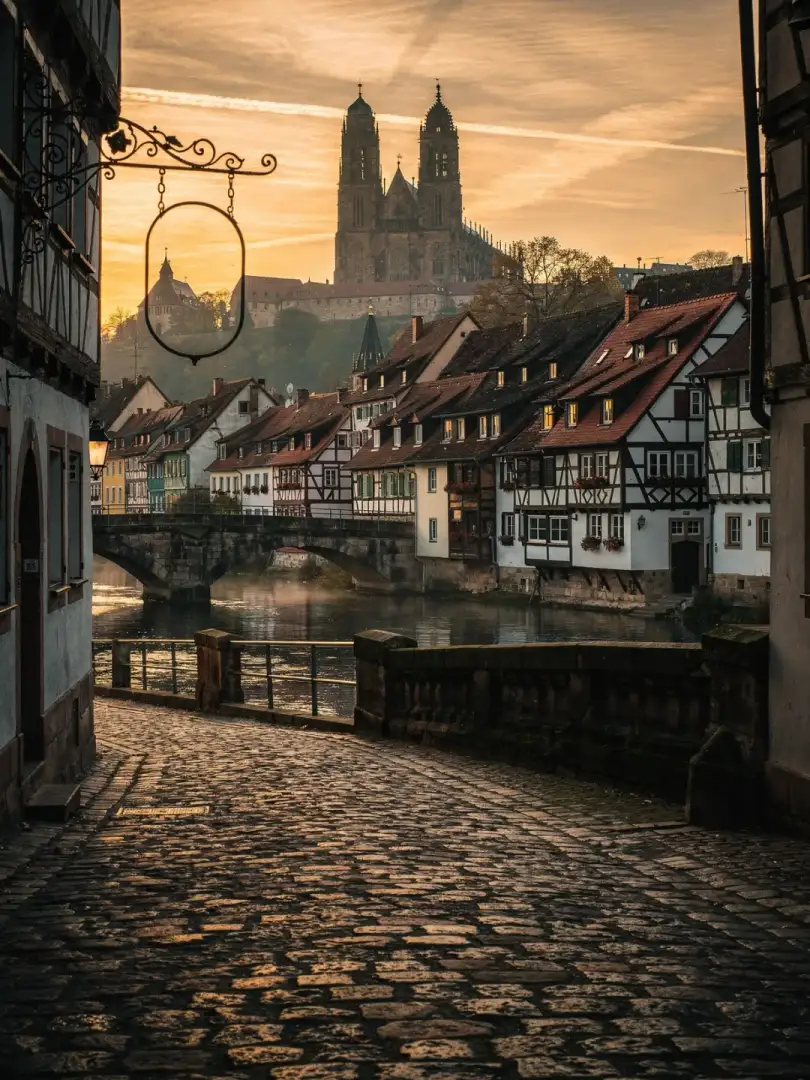
Bamberg sits on seven hills above the Regnitz, and beer cellars lie beneath several of them. The old town has been a UNESCO World Heritage Site since 1993, and right in its midst stand breweries you can recognize as such even from the street.
The city had its beer rules in place early. A Bamberg regulation from 1489 already named yeast as an ingredient, more than four hundred years before anyone truly knew what yeast was. Bavaria's Reinheitsgebot of 1516 came later and said nothing at all about yeast.
At the start of the 19th century, Bamberg still had 65 brewing sites. Industrialization and the world wars made most of them disappear. How many breweries the city has today depends on who's counting: some lists name eight traditional houses, others ten to twelve once new ventures are included.
According to the Bamberg breweries themselves, the old names include Klosterbräu (since 1533), Spezial (since 1536), Fässla (since 1649), Mahrs Bräu (since 1670), Kaiserdom (since 1718), Greifenklau (since 1719), and Keesmann (since 1867). The building at Dominikanerstraße 6, home today to Schlenkerla, is first mentioned in 1405.
The brewery got its nickname from brewmaster Andreas Graser, who walked with a limp after an accident with rolling barrels ('schlenkern' means to sway or limp). Today Matthias Trum runs the business as the sixth generation of the Graser and Trum family.
Bamberg Rauchbier has no EU protected designation of its own. The name doesn't appear in the EU register. Legally, Bamberg brewers follow the Bavarian Reinheitsgebot, meaning no sugar even in top-fermented beer.