Sandstone and Coolness
Water & Soil
Where Bamberg's brewing water comes from can't be answered with a single sentence for every house. Each brewery has its own source or connection, and each states its water hardness individually. There's no single figure for the city as a whole.
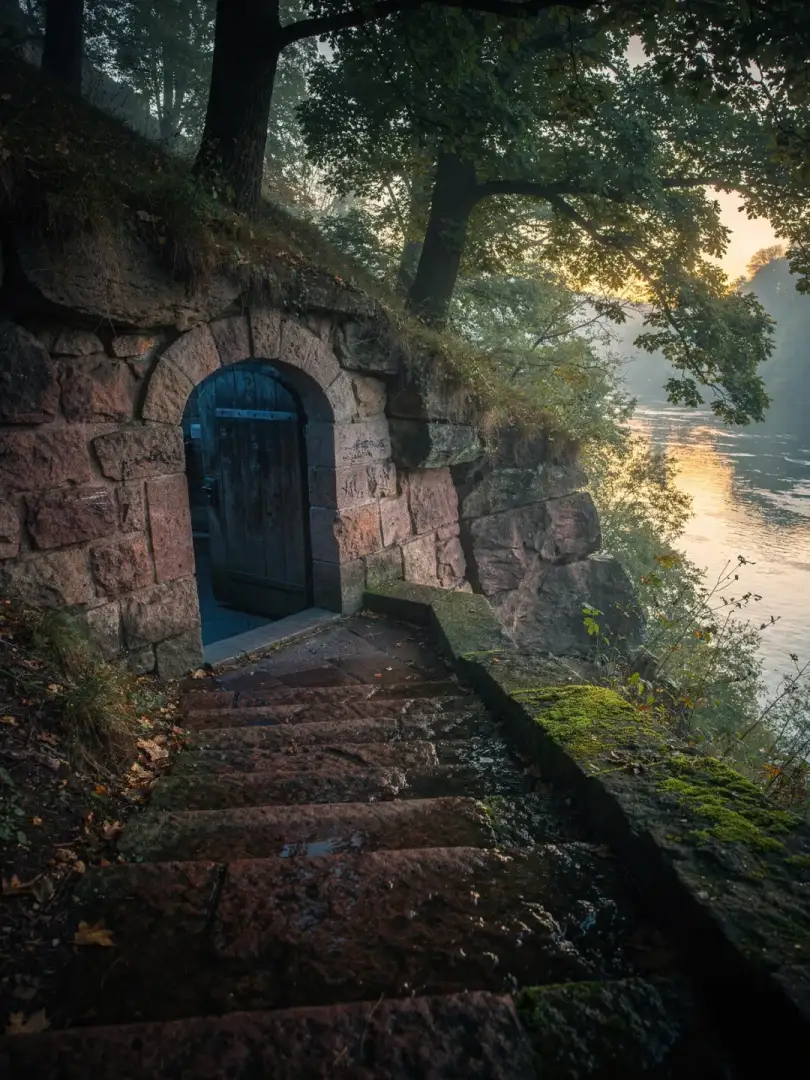
The soil, however, is certain. Bamberg's hills are made of sandstone, and for centuries brewers have dug passages into this stone. Beneath the Stephansberg, the Michaelsberg, the Kaulberg, and the Jakobsberg lie rock cellars, some dating back to the 14th century.
Why there, specifically? A cellar cut into rock stays cool in summer and frost-free in winter without anyone having to do a thing. Before refrigeration, this was essential for bottom-fermented beer: the yeast works slowly and cleanly in cellar-cold temperatures, and the beer matures quietly afterward.
On hills like the Stephansberg, the cellars have become open-air beer gardens, where you drink the beer right where it's stored. That's how Schlenkerla came to have its storage site, and several other houses have followed a similar path.
According to the brewery, Schlenkerla ages its beer in rock cellars beneath the Stephansberg. The hill, the sandstone, and the chestnut trees together form a kind of natural air conditioning for the city, older than any brewery standing today. Anyone sitting in the shade in summer and finding the beer pleasantly cool is feeling the hill, even without seeing it.
The landscape also includes the Regnitz, which flows through the city in several branches. It once carried grain in by boat, and several streets still bear the names of the trades that worked along the water.