Cold and Slow
Yeast & Fermentation
Bamberg Rauchbier undergoes bottom fermentation. The yeast works at low temperatures and settles at the bottom of the vessel after fermentation. The result is a lager, not an ale, even though the smoke might make it seem like something else entirely.
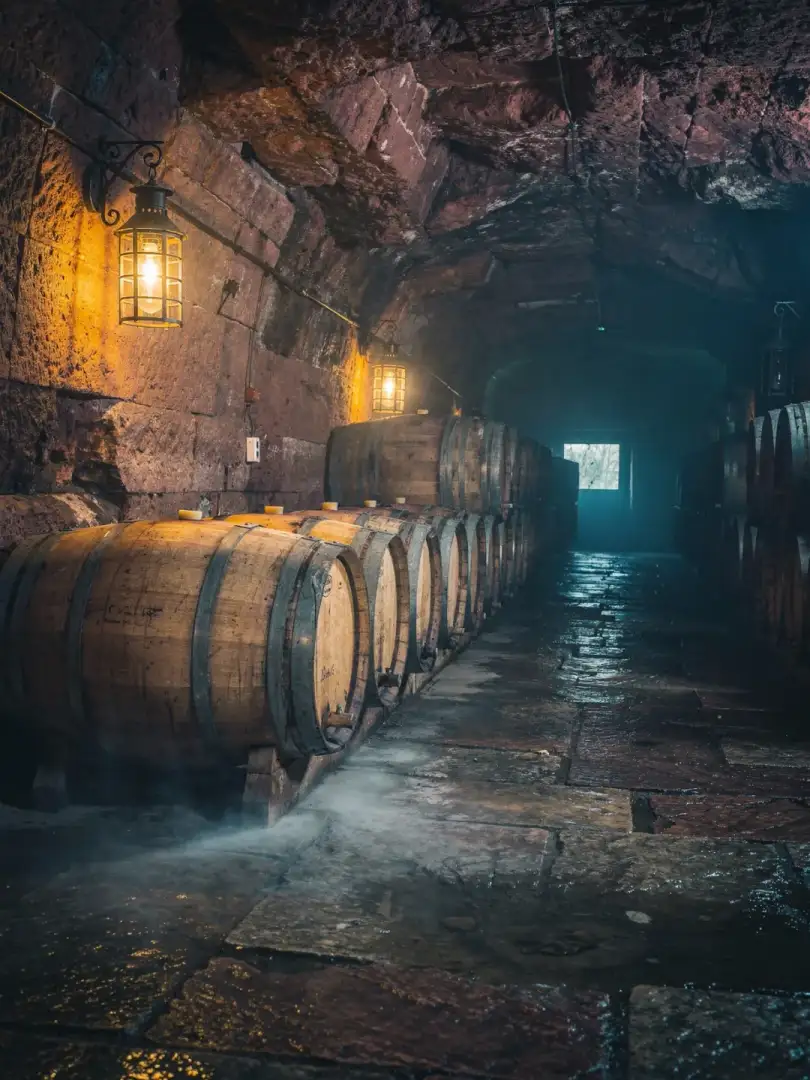
Fermentation is followed by lagering, and this is where the rock cellars come in. In the cool sandstone, the beer matures quietly, the yeast settles out, and carbonation binds into the beer. Exactly how long this takes varies from house to house, and most don't disclose it.
A style of its own is the unspunded Kellerbier. 'Spunded' means the cask is sealed airtight, letting carbonation build up in the beer. With unspunded beer, the cask stays open, the carbonation escapes, and the beer tastes softer and quieter. Mahrs Bräu offers such a beer with its Kellerbier 'U', and according to the brewery, the U stands for 'ungespundet' (unspunded).
According to the BJCP, an American competition guideline, Kellerbier isn't a distinct style with fixed numbers but a base style that comes naturally hazy and unfiltered straight from the lagering cask. It can be a Helles, a Märzen, or a dark beer. In Franconia it's also called Zwickelbier.
What sets Bamberg's yeast apart from elsewhere isn't a particular strain you could name. It lies in the lagering. Cold rock cellars have given the city its calm, rounded beers. At Schlenkerla, a house that is tavern and cellar in one, this connection is clearest of all: the beer travels from the hill into the cask and from there into the glass.