Restrained in the Smoke
Hops
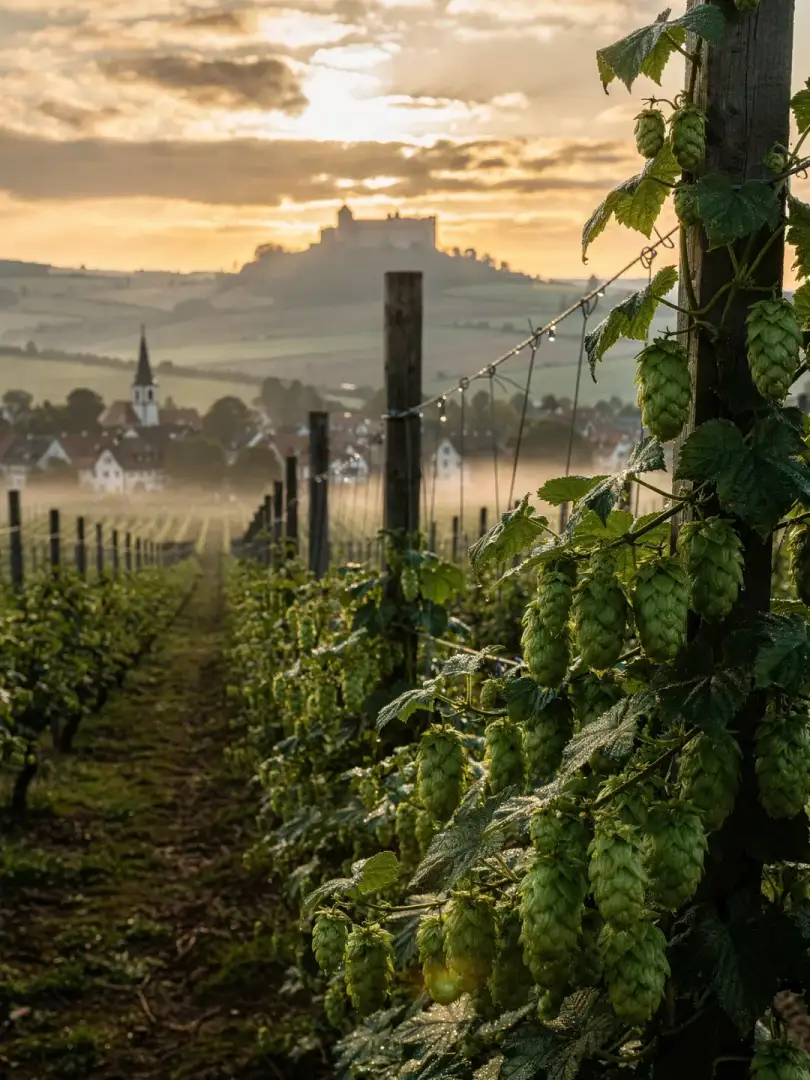
Does hops grow in Bamberg? Not to any significant extent within the city limits. Brewers source it from Germany's major hop-growing regions, and ask any specialist and you'll hear names like Hallertau and Spalt. Which varieties each house uses for its Rauchbier is something most keep to themselves.
Both regions carry EU protected status. Hallertau hops have been a Protected Geographical Indication since 2010, and Spalter hops from Spalt have even held Protected Designation of Origin status since 2012. These are fine aroma hops, working with floral and herbal notes, that don't make the beer sharp.
That suits Rauchbier well. Smoke is already a strong flavor on its own, and layering it with heavy hop bitterness would make for an exhausting drink. The style guidelines for Bamberg Rauchbier call for 20 to 30 bitterness units, considerably less than many pilsners.
Bitterness units, or IBU, measure the bittering compounds from hops. 20 to 30 means: noticeable, but never dominant. The hops keep the beer dry on the finish and balance the malt sweetness, leaving the smoke well alone.
If you want to taste the difference, try a Rauchbier followed by a pale Kellerbier from the same city. The Kellerbier lets the hops show through more clearly, since no smoke gets in the way. More on this in the section on beer styles. At Mahrs Bräu and Brauerei Spezial it's no different — there too, the hops serve the malt. The character stays Franconian: malt up front, bitterness as the backbone.