Roasted malt, rye, sugar
Malt & Grain
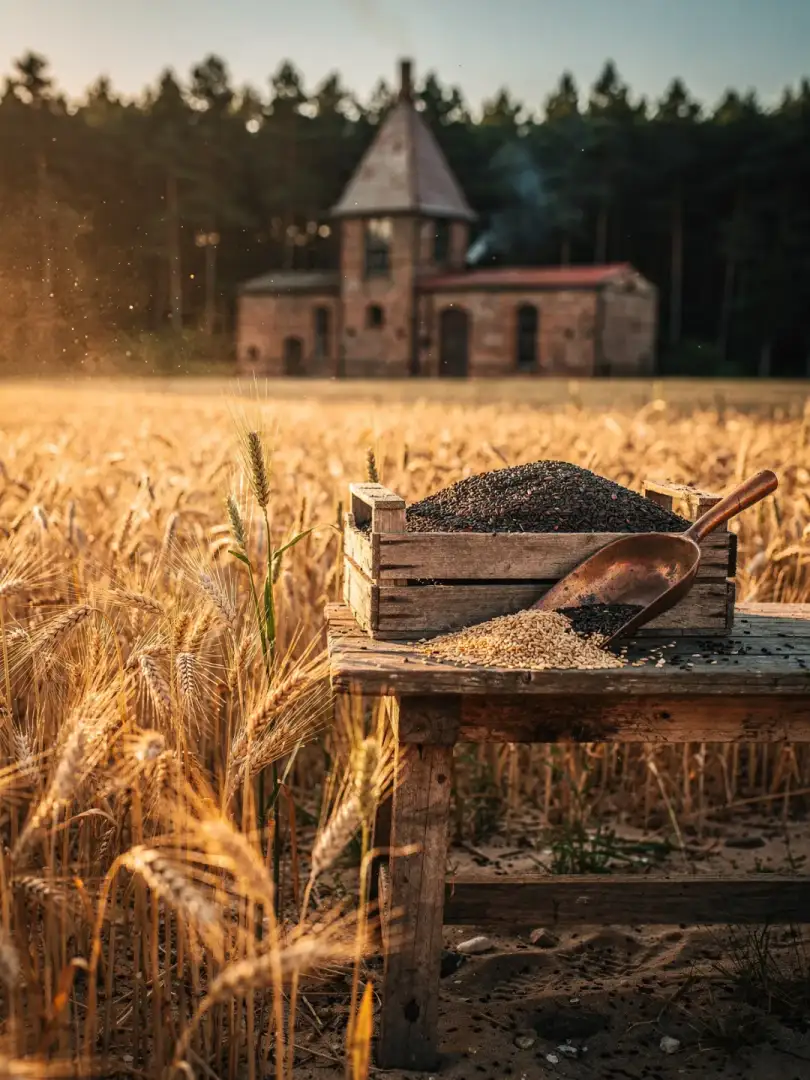
Schwarzbier tastes of dark bread crust and a touch of cocoa, and that comes from roasted malt. To make it, germinated barley isn't simply dried in the kiln but heated so intensely that it turns dark and develops roasted flavors. Taste the malt itself and you'll find caramel, coffee, and a hint of char. Only traces of this make it into the glass, since the beer shouldn't taste bitter-black like a stout.
Brandenburg's soils are sandy and poor. Rye has thrived here better than wheat for centuries, and rye bread remains an everyday staple in the region. For beer, barley is the backbone grain, but rye shapes the regional cuisine that the beer is later served alongside. Which varieties the Lausitz breweries buy, and from which maltsters, isn't uniformly disclosed, so we'll stick to what's documented.
What is documented is the sugar in Neuzelle's Schwarzer Abt. The brewery states it adds up to two percent invert sugar syrup. This is a liquid sugar produced by splitting table sugar into glucose and fructose. It adds a touch more sweetness to the finish and ferments readily.
Why this caused so much trouble: for bottom-fermented beer, the law permits only barley malt, hops, yeast, and water as ingredients. Sugar is only allowed in top-fermented beer, and in Bavaria not even there. Schwarzer Abt is a bottom-fermented Schwarzbier, which is why the authorities initially refused it.
The Federal Administrative Court saw things differently in 2005. The law allows state authorities to grant exceptions for "special beers," and the court classified Schwarzer Abt accordingly. So it's fair to say Brandenburg's beer dispute had little to do with the Reinheitsgebot of 1516: it revolved around the rules of modern law, not the Bavarian decree.