Beer City Dortmund
Region & History
Dortmunder Export is a pale, bottom-fermented beer first brewed in 1873 at the Union Brewery. Under brewmaster Fritz Brinkhoff, a beer emerged there that was fuller-bodied than a Pils and kept better in storage. The name says it all: it was meant to be exported, even to far-off countries.
Dortmund lies on the Hellweg, an old trade route running right through Westphalia. Brewing had been going on here long before industrialization. But with the coal mines and steelworks came thousands of thirsty workers, and the breweries grew along with them. Around 1900, Dortmund still had roughly 30 breweries.
Then things tightened up. After the First World War, raw materials were scarce, and the occupation of the Ruhr region made business difficult for many breweries. Eight brands survived, among them DAB, Union, Hansa, Thier, and Kronen. Together, Dortmund's breweries reached around 7.5 million hectoliters a year in the 1950s. From the 1950s through the 1970s, the city was considered the beer capital of Europe.
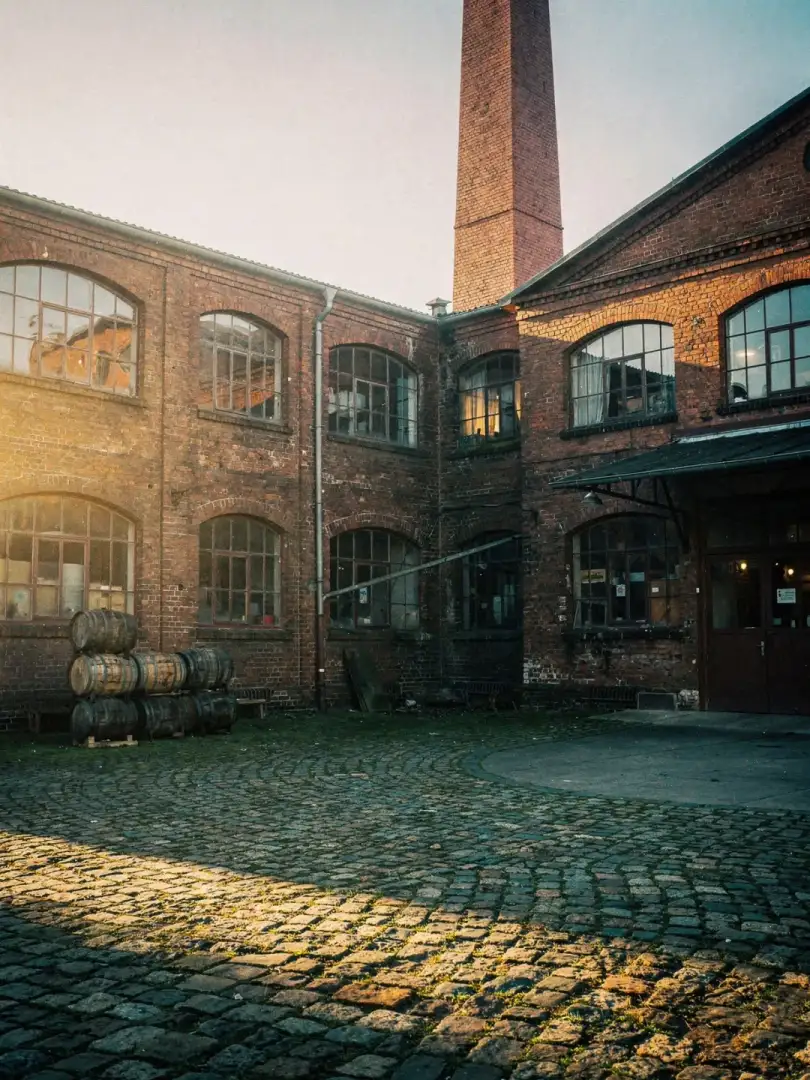
Then came the decline. The beer market changed, large corporations bought up brands, and sites in the middle of the city could no longer be sustained. The Union Brewery was sold to a Dortmund competitor in 1994. Today, Union and Brinkhoff's are brewed on the premises of the Actien-Brauerei, which belongs to the Radeberger Group. Alongside the big brands, the city is also home to smaller breweries.
What the term "Dortmunder" means legally is regulated by Brussels: Dortmunder Bier has been a Protected Geographical Indication (PGI) since July 18, 1998, meaning the name is tied to the city. Whether a beer is sold as an Export, a Pils, or a Helles is not covered by this protection. The Dortmund Brewery Museum, housed in the old machine house of the Hansa Brewery, has been telling this story on its original site since 2006.