Fermenting in the Tower
Yeast & Fermentation
Is Dortmunder Export top- or bottom-fermented? It's bottom-fermented, like all lager beers. The yeast works at cool temperatures of around eight to twelve degrees Celsius and settles to the bottom of the tank at the end of fermentation. This produces a clean, clear beer without fruity side notes.
Dortmund had an unusual piece of architecture for this purpose. In 1927, the Union Brewery built a high-rise for its fermentation cellar, designed by architect Emil Moog. There, the beer fermented and matured across many floors, with gravity doing the work instead of pumps. Since 1968, the tower has carried a golden "U" four stories tall on each side. That's how the fermentation cellar became known as the Dortmunder U.
After primary fermentation comes lagering. The young beer rests at temperatures near freezing, often for several weeks. During this time, it breaks down secondary aromas, clears up, and develops its smooth carbonation. For Export, a long lagering period mattered greatly, since the journey overseas was a long one.
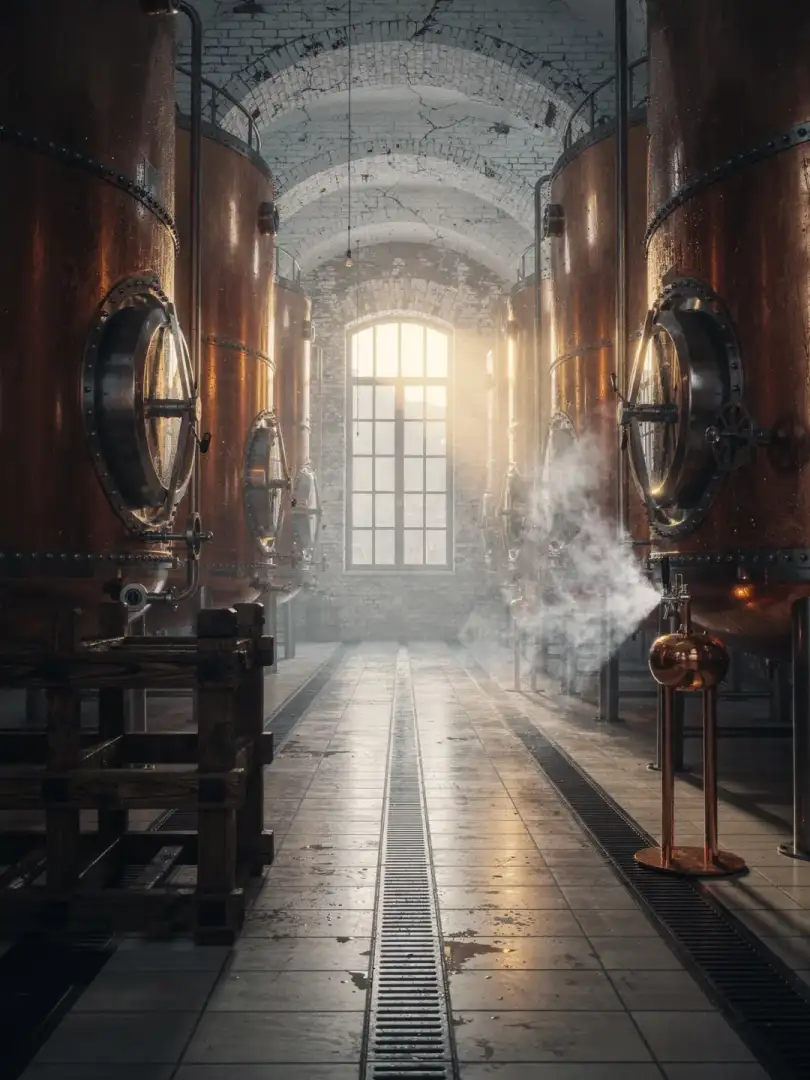
This, too, is what the fermentation cellar was built for: it could be kept evenly cool. Dortmund's brewers worked on a large scale early on, and the beer still had to taste the same every single time. This consistency remains, to this day, considered a hallmark strength of the style.
Today, breweries ferment in closed stainless steel tanks that can be cooled precisely. The Dortmunder U no longer serves brewing purposes at all — it's now a cultural center and a monument to beer history. The yeast itself is usually propagated by the breweries over generations; it's their most valuable asset. Which strains they use is something the companies mostly keep to themselves.