Pale Malt
Malt & Grain
What malt is Dortmunder Export brewed from? Pale barley malt, usually Pilsner malt, sometimes with a small portion of Munich malt. Malt is germinated and kilned barley: the grain is made to sprout so it can break down starch, then it's dried in the kiln. The hotter the kilning, the darker and more roasted the malt becomes.
Export stays pale. Its hallmark is a malt body that feels more substantial than a Pils. Behind this lies the original gravity — the sugar and other dissolved substances in the wort before fermentation. For Export, this is notably higher than for Pils, ranging, according to the BJCP competition guidelines, between 12.4 and 14.3 degrees Plato.
That high sugar content later turns into alcohol. Hence the strength of around five to six percent. Anyone reading the word "Export" in the name should take it literally: in the past, Dortmund brewers made a stronger beer so it could survive long voyages by ship and rail.
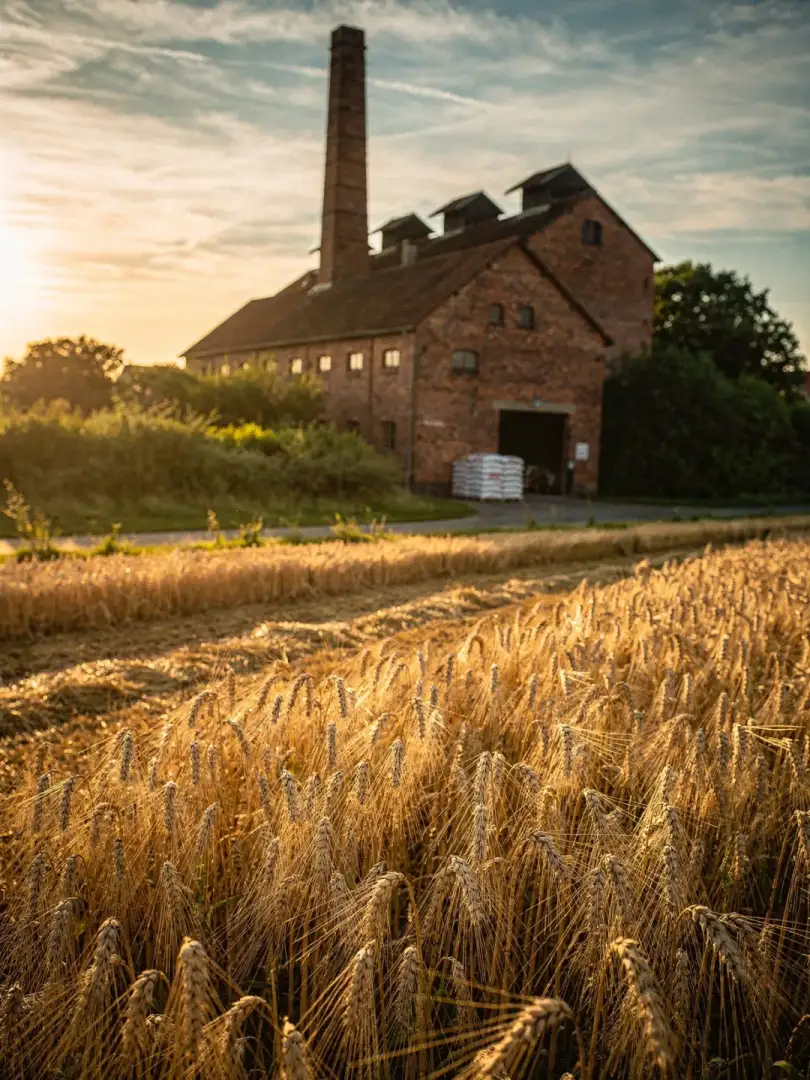
The barley for Dortmunder beer doesn't grow within the city. Dortmund is an industrial city, and the surrounding fields are small. As with most German breweries, the malt comes from maltings that process spring barley from Germany or neighboring countries. Which malting house supplies a particular brewery is usually something the companies don't disclose.
During mashing — soaking the crushed grain in warm water — the sweet wort is created. Dortmund's brewers boiled it long and thoroughly, so the beer stayed full and round. The hops only go into the kettle afterward.