Farm, Shares, Pilsner
Region & History
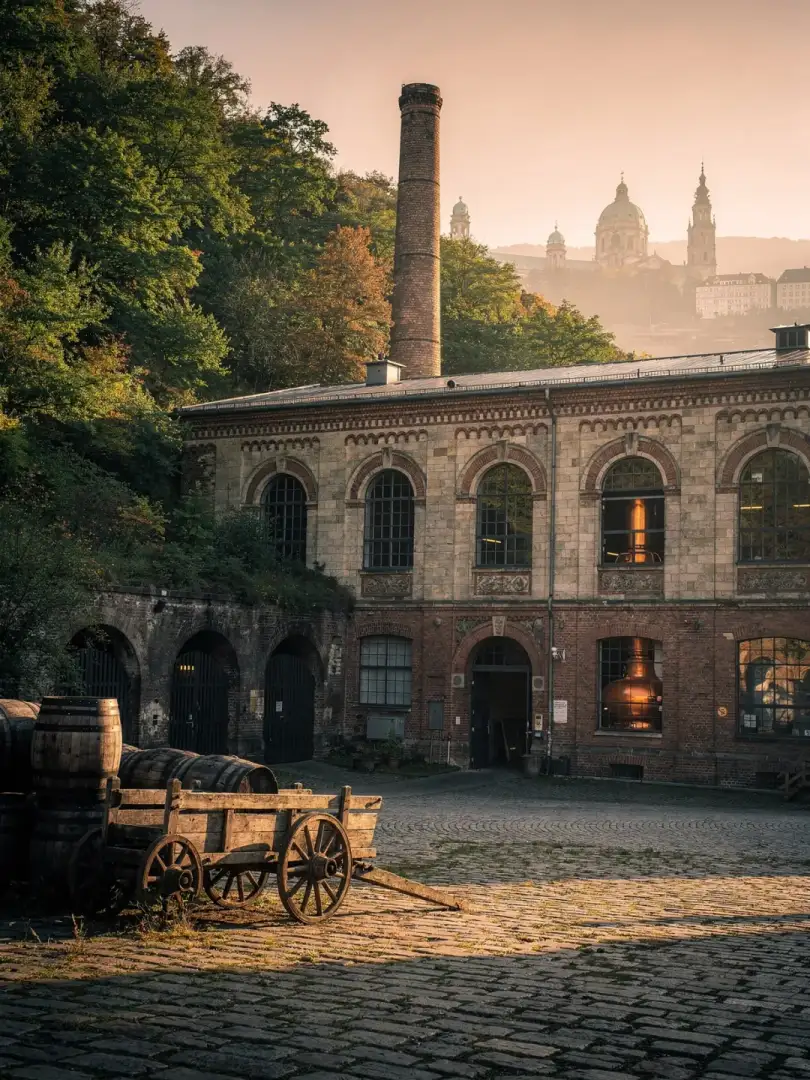
Beer has been brewed in and around Dresden for longer than Pilsner has existed. At the foot of the Hahneberg, a farm was permitted to serve beer and wine from 1644, and this country inn later became the Feldschlößchen.
In 1836 the Societätsbrauerei Waldschlösschen was founded. The Meisl brothers bought the Feldschlößchen in 1838 and built a lager brewery there — a brewery for bottom-fermented beer that matures in the cool of the cellar. In 1858 came the Aktienbrauerei zum Feldschlößchen, a joint-stock brewery. Shares were a popular way at the time to raise enough money for kettles and cellars.
When did Pilsner arrive in Saxony? Pilsen brewed its first batch on 5 October 1842, and just thirty years later, in 1872, five men founded a joint-stock brewery called Zum Bergkeller in Radeberg, northeast of Dresden. From 1885 it was known as Radeberger Exportbierbrauerei. According to the brewery, it is the first brewery in Germany to brew exclusively Pilsner-style beer — and it still exists today.
The accolades, too, come from brewery lore. According to this, Chancellor Bismarck elevated Radeberger Pilsner to Kanzlerbräu ('Chancellor's Brew') in 1887, and in 1905 it earned the title of the Saxon king's drink.
The war hit the city breweries hard: at Feldschlößchen, 55 percent of the facilities were destroyed, yet production resumed as early as 1945. In the early 1960s, Feldschlößchen, Felsenkeller and Waldschlößchen were merged into the VEB Dresdner Brauereien. Radeberger today belongs to the Radeberger Gruppe, while the Brauhaus am Waldschlösschen continues to pour.
There is no protected designation of origin for the beer itself. In Germany, Pils is a generic term, and no Saxon beer is listed in the EU register. Only the hops from the surrounding area are protected: Elbe-Saale hops have carried the PGI seal since 2014.