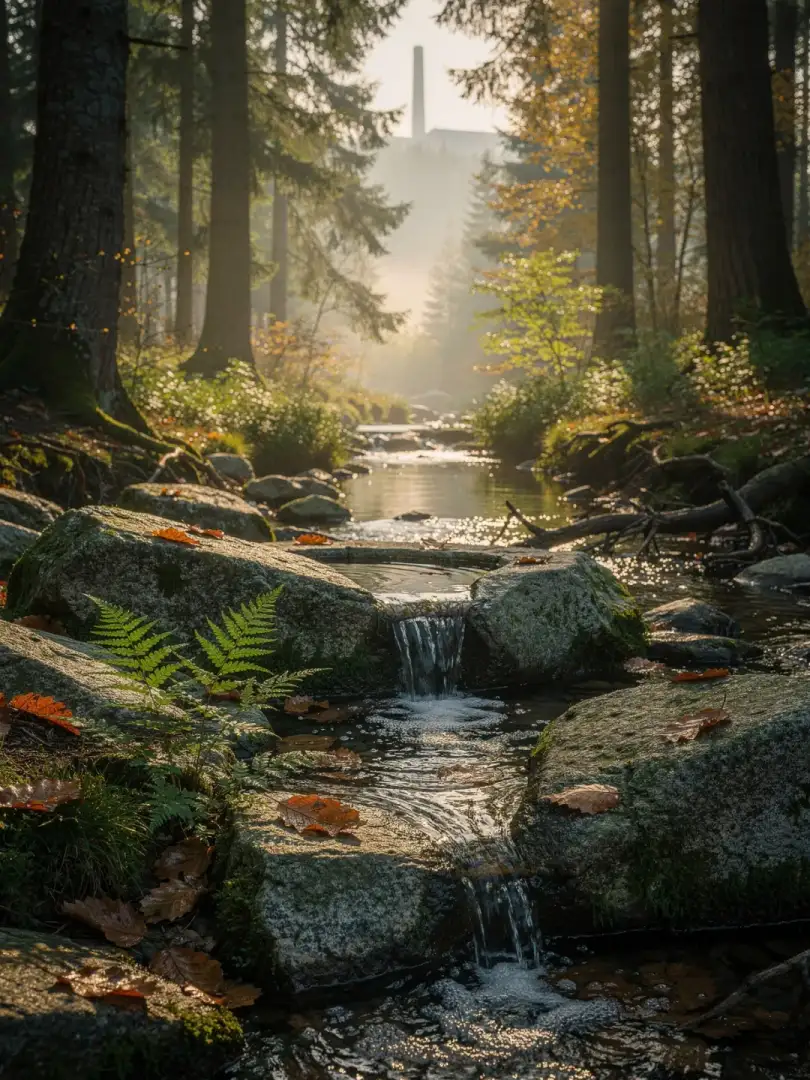
Granite, Karlswald
Water & Soil
Where does the water for Radeberger Pilsner come from? According to the brewery, from the Karlswald forest near Radeberg — and always has. The forest lies in the Western Lusatia region, where the soil is shaped by granite and related rock.
Crystalline rock yields very little mineral content to water. As a result, it tends to be soft, which suits Pilsner well: soft water lets the hop bitterness come through clean and clear instead of harsh. We have found no verified specific hardness figures for Radeberg, so we won't cite any.
The Elbe Valley itself sits on different geology. Between Pirna and Meißen, the river widens into a broad basin, with the sandstone cliffs of Saxon Switzerland rising to the south. For the city breweries, the slope above the river mattered chiefly as a cellar site, since the rock stays cool year-round.
That such a cellar was once essential is hinted at by the very name of Radeberger's origin, Zum Bergkeller ('At the Hill Cellar'). Bottom-fermented beer demands cold, and before refrigeration, that cold was found underground, where little warmth reached even in summer.
Today, nearly all breweries treat their water, softening it or adding salts. The water from this granite country explains the region's reputation, but it no longer alone determines the taste of a beer brewed today.
The thought remains compelling all the same: anyone drinking a Pilsner in Radeberg is tasting a tradition that began with forest, stone and cold. The brewery itself emphasizes that its Pilsner is still brewed exclusively in Radeberg to this day.