Cold, Long, Clear
Yeast & Fermentation
Saxon Pilsner is bottom-fermented, and that has consequences. Bottom-fermenting yeast works at just a few degrees above freezing, settles at the bottom after fermentation, and takes longer than the top-fermenting yeast used in, say, a Kölsch.
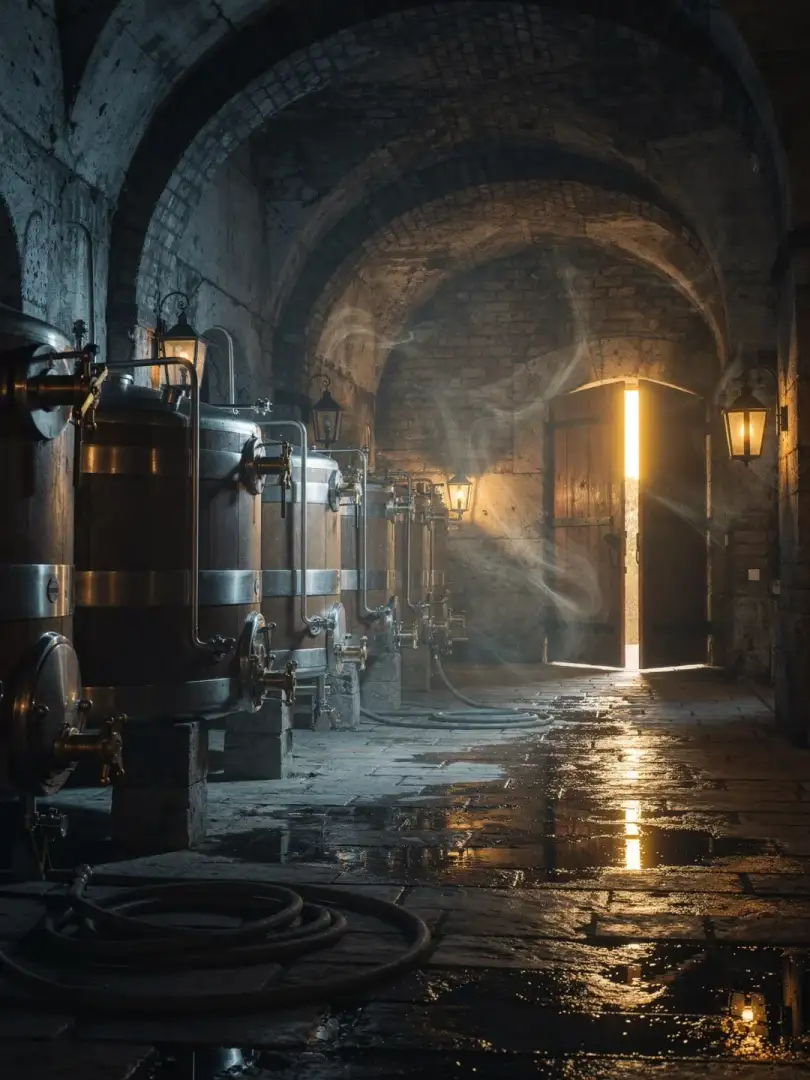
This produces a clean beer free of distracting fruity side notes. After primary fermentation comes lagering, during which the beer matures and clarifies. The word 'lager' itself recalls this: the beer was stored to mature in cool cellars, often in rock cellars along the Elbe slopes in Dresden.
The yeast itself is a hybrid product. Saccharomyces pastorianus, the yeast behind all lager beers, is a cross between the brewer's yeast Saccharomyces cerevisiae and a wild relative first described in Patagonia in 2011. It has been kept in pure culture since the 19th century, with the first successful isolation achieved by Emil Christian Hansen in Copenhagen in 1883.
So when Radeberg began brewing in 1872, the nature of yeast was only just becoming understood. Brewers passed on the sediment from the previous batch without knowing what lived within it. Scientific knowledge only caught up with practice later.
How long the Saxons lager their Pilsner varies from brewery to brewery. One rule of thumb holds everywhere, though: the colder and longer the maturation, the finer and clearer the result — and the more cellar space it demands.
A brewery like Radeberger, with its large tanks, works in principle just like a small brewhouse: wort, yeast, cold, time. Only the volumes and the technology differ, not the method.