Tulip, Cool, Crisp
Tasting
In the glass sits a clear, pale golden yellow with a firm white head. The nose picks up grain, a hint of hay and grassy herbal notes, followed on the palate by a pronounced yet not harsh bitterness. The finish is dry and relatively short.
The regional examples form a small lineup. Radeberger Pilsner is considered the showcase beer, a Pilsner from the brewery in Radeberg. Alongside it stand Feldschlößchen from Dresden, Waldschlösschen, and the Pilsner from Freiberger Brauerei in the mining town at the foot of the Ore Mountains. Tasting them side by side reveals differences in bitterness and body that look small on paper.
A serving temperature of around six to eight degrees Celsius is commonly recommended for Pilsner. That's a rule of thumb, not a law, and it's fine to go a bit colder in summer.
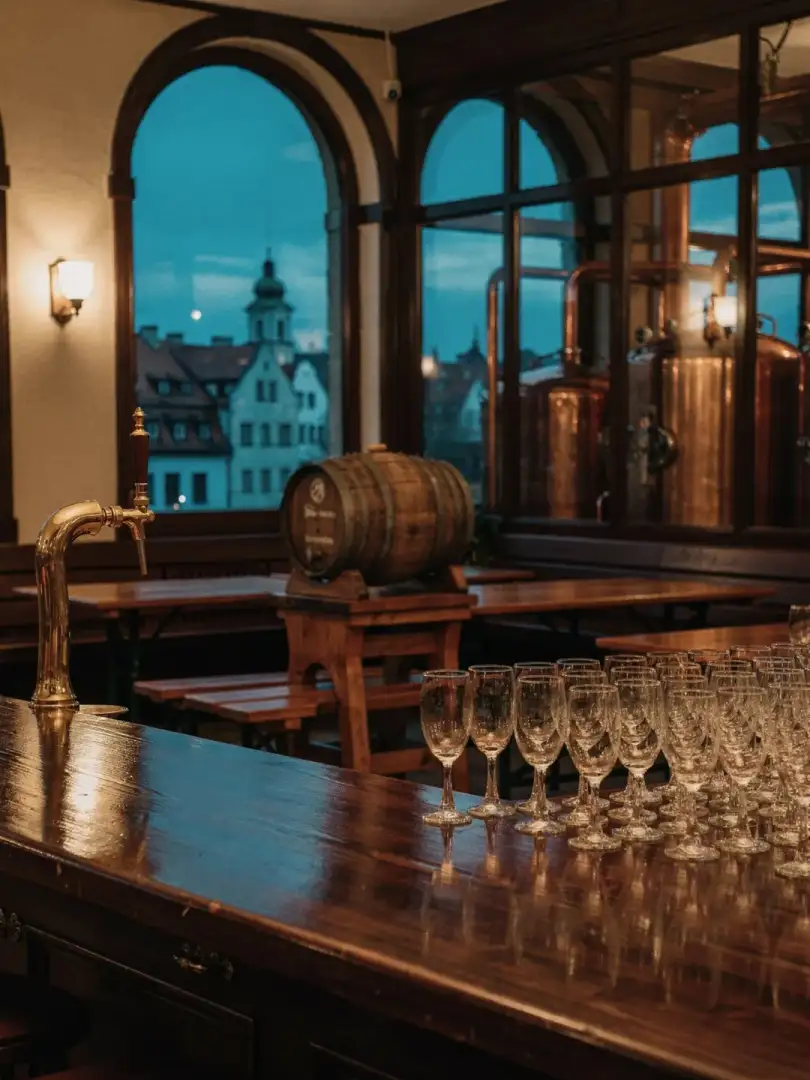
It's served in the Pilsner tulip, a slender glass with a stem or foot that flares slightly at the top. The shape keeps the foam cap stable and gathers the hop aroma. Well chilled but not ice-cold is how it tastes best, since too much cold mutes the aroma.
Pouring it calls for patience. It's drawn in several stages: first a foam base, then the beer, with the crown finishing it off. People speak of a seven-minute pour as a kind of folklore figure — there's no official standard, and the time varies depending on the setup.
To taste the difference from Helles, hold the two side by side. Helles is softer and maltier, while Pilsner is leaner, more bitter, and lingers longer on the hop note.