Cold-Fermented, Lagered
Yeast & Fermentation
Why is a Pils called bottom-fermented? Because the yeast settles at the bottom of the tank during fermentation and works at low temperatures, usually between five and ten degrees Celsius. The yeast converts sugar into alcohol and carbon dioxide, and since it works slowly in the cold, the flavor stays clean, without the fruity notes typical of top-fermented beers.
After that, the beer is lagered—quite literally, for a Lagerbier: "Lager" means storage. The young beer is left to rest cold for several weeks, so that sulfur notes and yeasty flavors fade and the beer turns clear. The word for the style thus comes straight from the cellar, and that's as true for Bitburg as it is for Pilsen.
How long Bitburger lagers its Pils and which yeast strains it uses, we can't say with certainty—both are closely held company details. So we'll stick to what's verified: the Premium Pils is bottom-fermented, as the style guideline for German Pils describes. The modern process takes place in closed stainless steel tanks, where temperature and pressure can be precisely controlled.
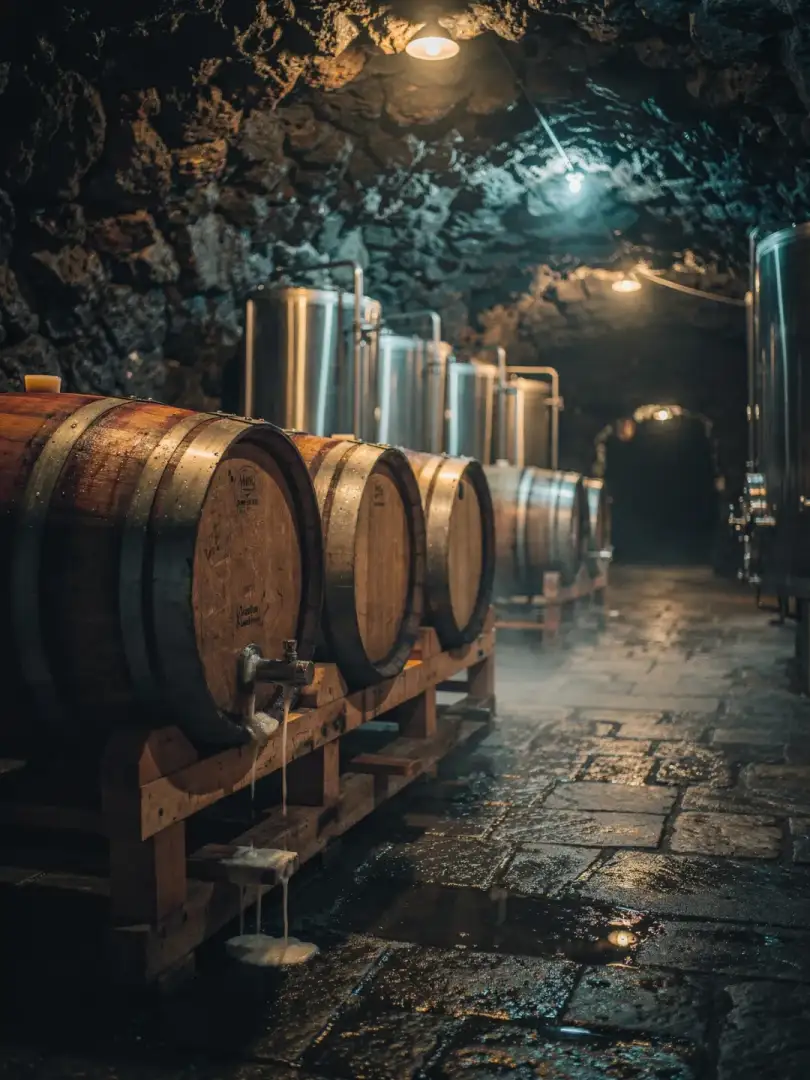
The small brewers work differently. According to the Vulkan Brauerei, its beers age in barrels for up to six months, at a steady six to eight degrees Celsius in the cellars. That's considerably longer than for an industrial Pils and gives the beer time to become round and mellow.
A counterpoint comes from the Gemünder Brauerei, founded in 1961, whose lineup includes "Ur-Gemünder obergärig", a beer fermented with top-fermenting yeast. It shows that the Eifel is about more than just Pils. The difference shows up quickly in the glass: fruitier, rounder, less austere.