Pils and Landbier
Beer Styles
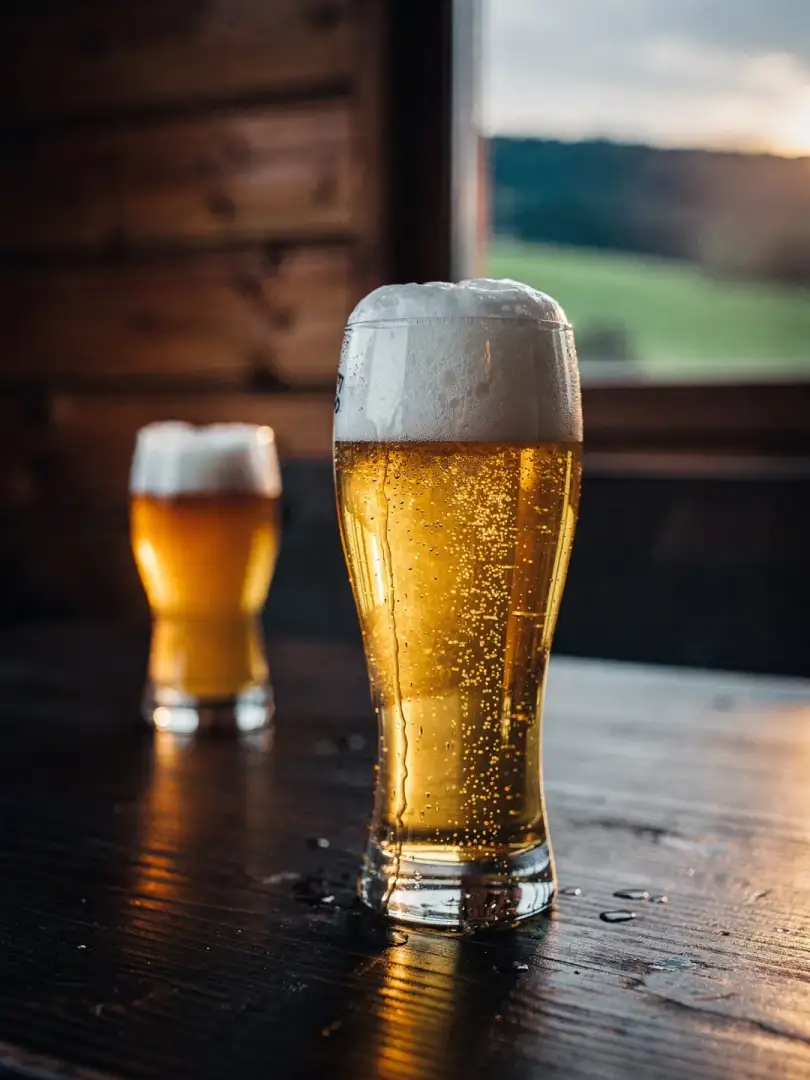
What is a Pils? A pale golden, bottom-fermented beer with a white, stable head and pronounced hop bitterness. The name comes from the city of Pilsen in Bohemia, where Josef Groll brewed the first pale, bottom-fermented beer in 1842. In Germany, "Pils" is a generic style name—only specific brands like "Pilsner Urquell" are protected, not the word itself.
The Pils from the Eifel is dry and crisp, with clear bitterness and little sweetness. In Bavaria, people tend to drink Helles instead. Bitburger Premium Pils, according to the brewery, has 4.8% ABV and 11.3% original gravity. Both figures sit right in the middle of the style guidelines.
How does a Pils differ from a Helles? Helles stays maltier and milder, with just 16 to 22 bitterness units, while Pils, by the guideline, ranges from 22 to 40. If you're after a beer without sharp bitterness, Helles is the better choice. If you like dryness and a crisp finish, reach for the Pils.
Between the two sits Landbier, a style term without a formal guideline. The Bitburger Brewery's Eifelbräu Helles Landbier launched in 2021 and, with a second hop addition, carries more aroma than a classic Helles. It's not a protected style. "Landbier" usually refers to an unfiltered or pale beer with a regional connection.
Unlike Bitburger Pils, the beers from the Vulkan Brauerei in Mendig or the Gemünder Brauerei in the northern Eifel are more specialty beers for connoisseurs. Here you'll find barrel-aged beers, top-fermented ales, and the Steinfelder Klosterbier. Incidentally, a Klosterbier is not a Trappist beer—it's simply an unregulated name for a beer with monastic ties.
Pils (German)bottom-fermented
- Original gravity
- 11–12.4 °P
- Alcohol
- 4.4–5.2 % vol
- Bitterness
- 22–40 IBU
- Colour
- 4–8 EBC
Pale gold, white head, dry hop bitterness, clean finish.