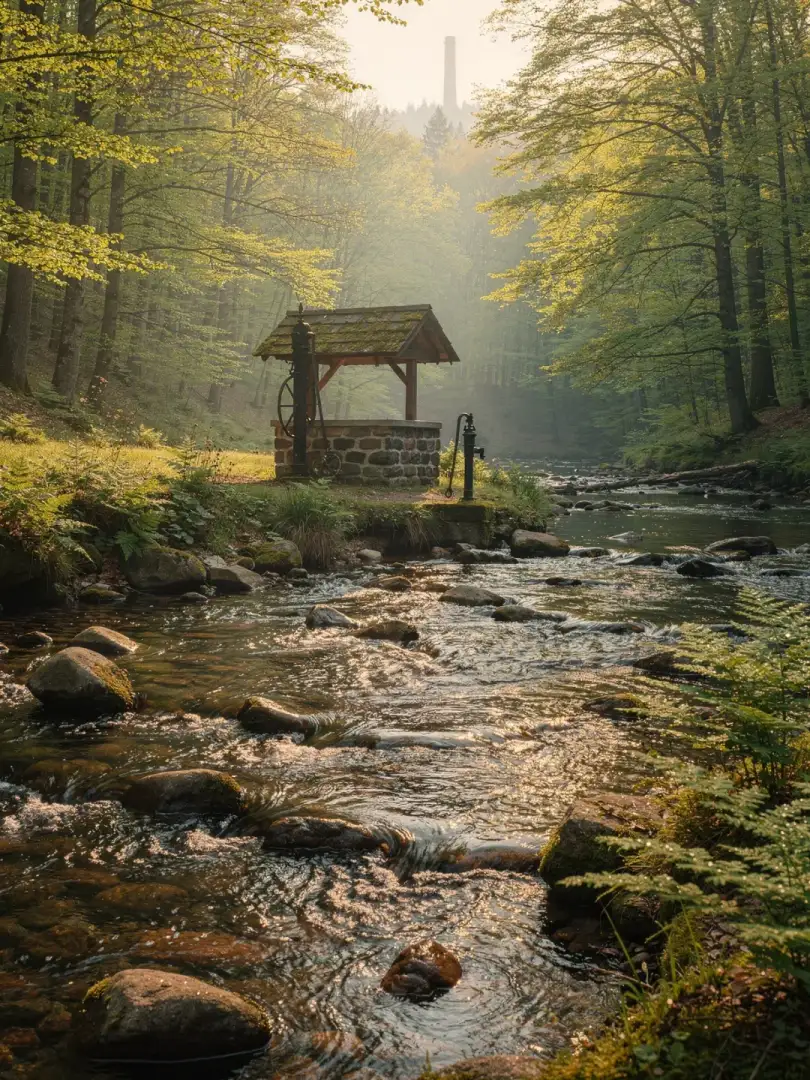
Deep Well, Eifel Brewing Water
Water & Soil
When it comes to brewing water, Bitburger has always promoted the Eifel. The brewery talks of "Eifeler Brauwasser" and names it, alongside the hops, as the second reason for its Pils's flavor. That's the brewery's own framing, and it's colored by marketing. For understanding purposes, it's enough to know that water makes up about ninety percent of the finished beer.
One date is well documented: in 1909, Bitburg's first deep well went into operation. Before that, the brewery had to make do with whatever water was available in town. Having its own well meant independence: consistent quality, even as the brewery grew and began brewing more beer seven days a week.
We won't state exact figures for the water's hardness or dissolved mineral content here, since reliable values aren't available. Qualitatively speaking: softer water tends to suit a pale Pils better, since it lets the hop bitterness come through cleanly. Hard, carbonate-rich water, by contrast, would make the beer taste broader and rougher—more like what you'd expect from darker styles.
Important for today: nearly every brewery treats its water, softening it or adjusting it with salts. The idea that water alone defines a style holds truer for history than for the present. Still, the Eifel remains an argument—mostly one for the mind: drink here, and you taste the landscape along with the beer.
Cool and solid is also the ground beneath the cellars. In the Vulkan Eifel, where the Vulkan Brauerei ages its beers in barrels for up to six months, the brewery states that the cellars stay at a steady six to eight degrees Celsius with very high humidity. It's a climate in which beer can develop at its own quiet pace.