Half-Timbering and Sausage
Food & Beer Culture
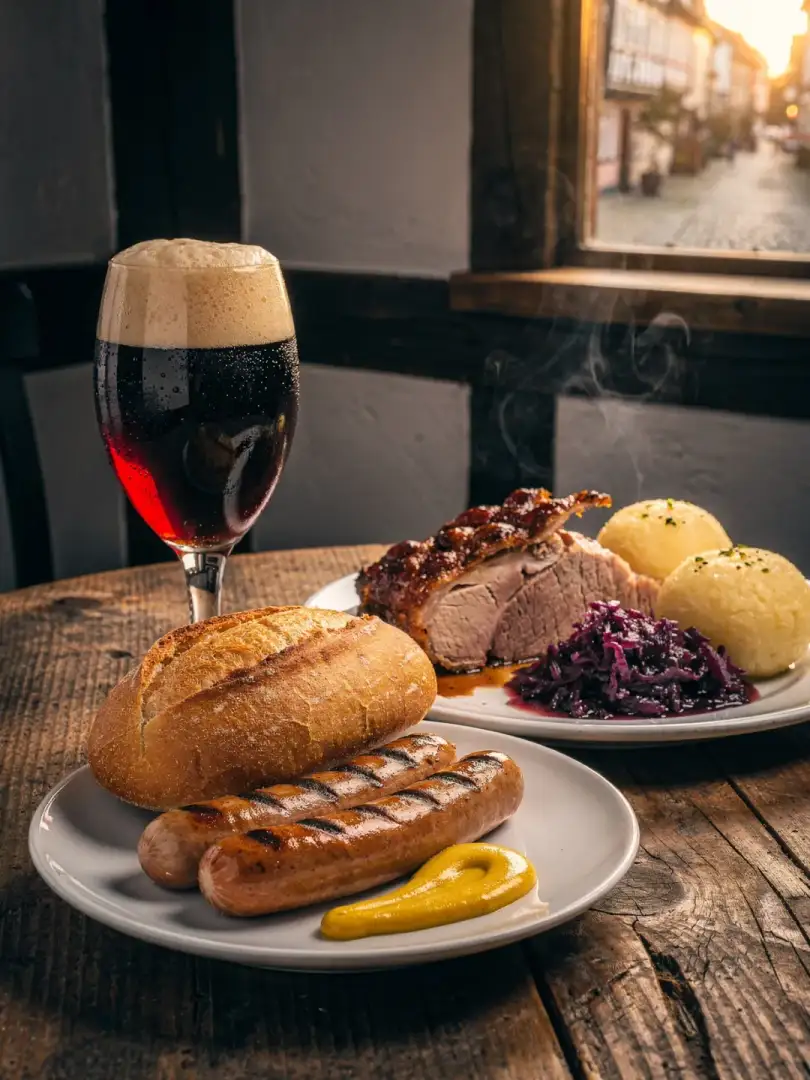
Why is it called Bockwurst? The name traces back to bock beer: the sausage was considered a fitting accompaniment to a glass of bock. According to widespread accounts it was named this way in the late 19th century, though more precise details couldn't be verified here. Between Einbeck and Göttingen it still turns up at many a snack stand and bar counter, served with mustard and a roll.
Dishes with their own roasted notes pair well with a malty beer. A roast pork with crackling, braised red cabbage, dumplings, and dark gravy harmonize beautifully with the toast character of a dark bock. The beer's sweetness balances the dish's seasoning and the richness of the sauce.
Einbeck is a town of half-timbered houses and vaulted cellars. Taverns and town hall cellars are part of its fabric, and in the old town you can sit in rooms where beer was likely poured centuries ago. The brewery itself offers tours, and the Ur-Bock-Keller is open as a site of brewing heritage.
In spring, much of the attention turns to Maibock. Pale, robust beers are then served with asparagus, ham, or hearty home cooking — anything that pairs well with spring vegetables and meat. Many innkeepers mark the tapping of the first casks with small rituals.
The usual pours in a tavern are smaller than for Pilsner. Bock comes in 0.3 or 0.33 liters, sometimes 0.5 liters, and that's down to its strength. Beer should be enjoyed with pleasure, not haste.