Bock in the Glass
Tasting
What does an Einbeck bock taste like? To try the beer at its source, reach for one from Einbecker Brauhaus AG, such as the Ur-Bock Dunkel or the Mai-Ur-Bock as a pale spring bock. Then there's the Brauherren Pils as a contrasting example with notably less malt. All three serve well as flavor examples, though no figures should be drawn from them — the exact numbers are on the label.
The dark bock has aromas of bread, roasted malt, and a light sweetness. On the palate it feels full and round. Then comes a finish of nuts and dark fruit, with the hops staying reserved. In the pale Maibock, honey, grain, and a touch of fresh spice take the lead.
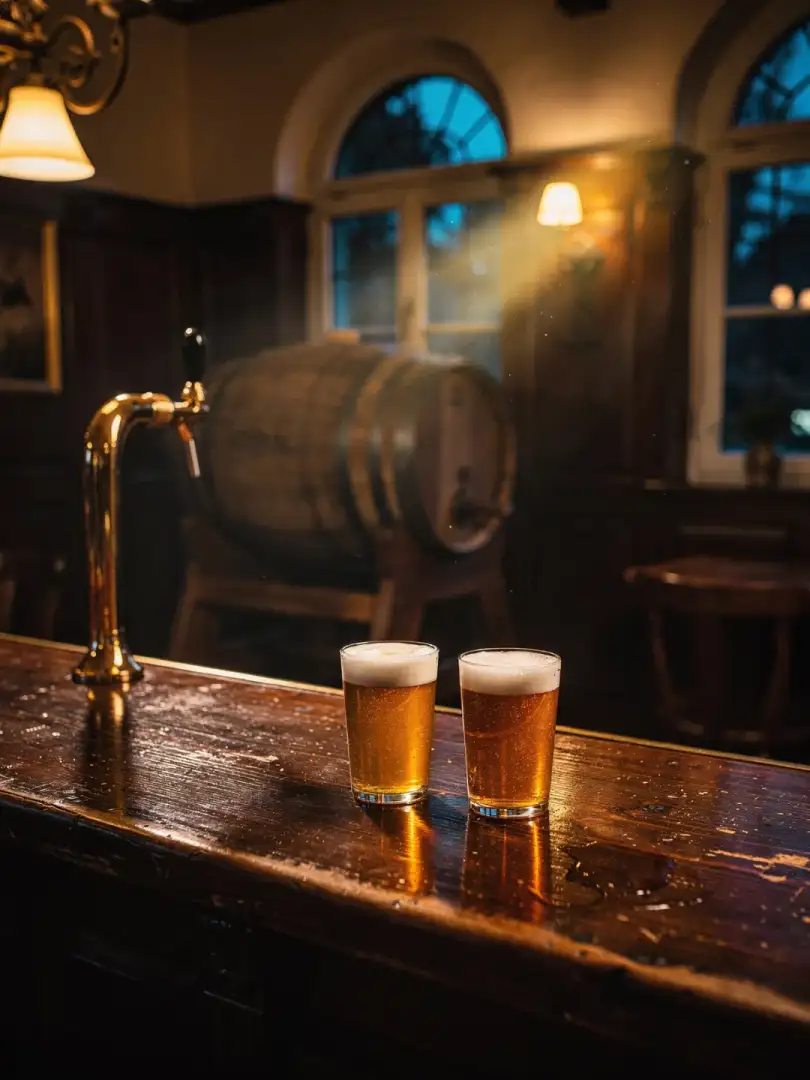
A tulip glass or a mug with a slight taper at the top works well, concentrating the aroma and giving the foam support. For bock, 0.3 liters is often enough, since it's stronger and meant to be sipped slowly. The temperature shouldn't be too cold: at around 46–50°F (8–10°C), malt aromas come through far better than at Pilsner temperature.
When pouring, tilt the glass and let the beer run down the side, then straighten it to build a dense crown of foam. Bock is heavy and foams only moderately, so a two-finger head is a good sign. It doesn't reward rushing.
Anyone trying more than one should drink water in between and eat something alongside. Bock carries real alcohol, and it goes to your head faster than its smooth taste suggests.