Hanse & Bock
Region & History
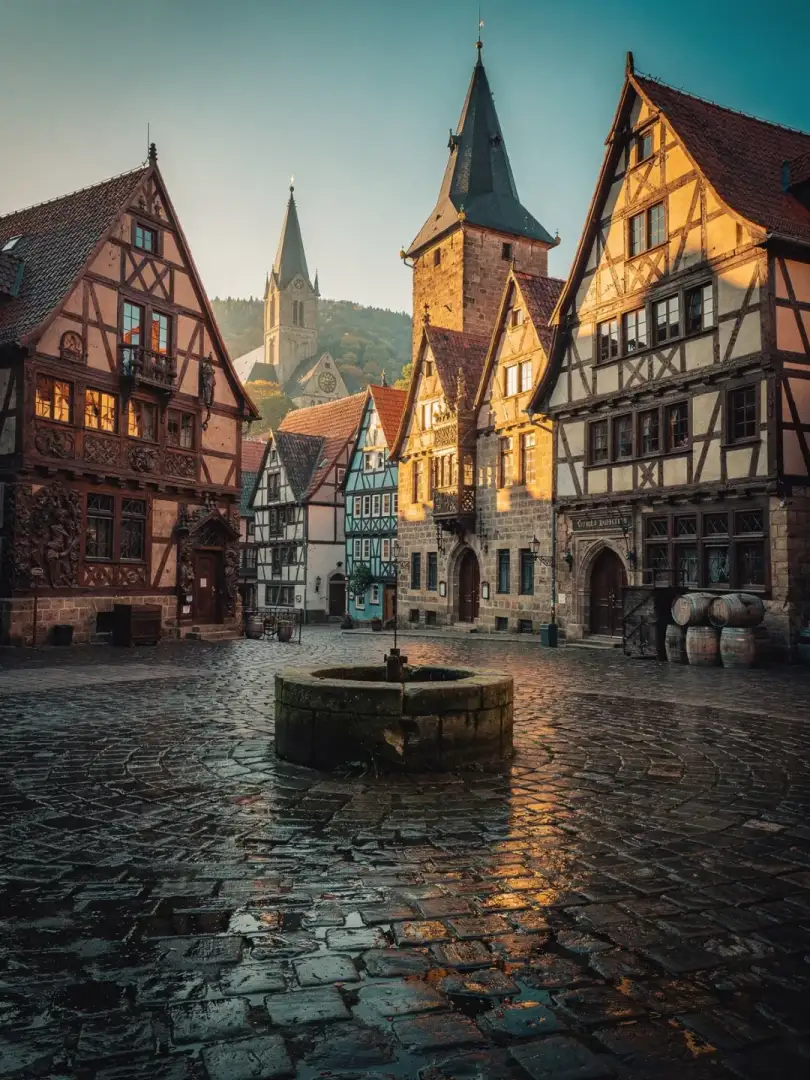
Why is bock beer called bock? Because of Einbeck. The town lies in southern Lower Saxony between the Leine and the Solling, and its "Ainpöckisches Bier" became "Oanpock" in Munich dialect, and finally "Bock." The name has nothing to do with the billy goat on the labels, that came later as a pun.
Einbecker beer is first documented in 1378, when a delivery to Celle was recorded. According to local tradition, Einbeck belonged to the Hanseatic League from 1368. In the 14th century around 700 full citizens held brewing rights and brewed in their own homes. The town council bought up the surplus barrels and sold them on via Hanseatic trade routes, from Amsterdam to Reval.
Martin Luther is said to have declared before the Diet of Worms in 1521 that the best drink he knew was called Einbecker beer. At any rate, it's well documented that the beer's fame reached far beyond the region. Citizens brewed their own beer until 1794, after which a communal town brewhouse took over the work.
The Munich court began ordering Einbecker beer in 1555. This was expensive, since the journey to Bavaria was long. So in 1614 the Einbeck brewmaster Elias Pichler was brought to the Hofbräuhaus, where he brewed his "Ainpöckisch Bier." The Einbeck specialty became a Munich strong beer, and the word "Bock" stuck to it.
There's no protected designation of origin for it: "Einbecker Bier" doesn't appear in the EU register of protected geographical indications. "Bockbier" is likewise now a generic style rather than a place name. Under German beer regulations, a beer can carry this name if it has at least 16 percent original gravity — enough malt sugar in the wort before fermentation. Where it's brewed makes no difference.