Leine, Ilme, Solling
Water & Soil
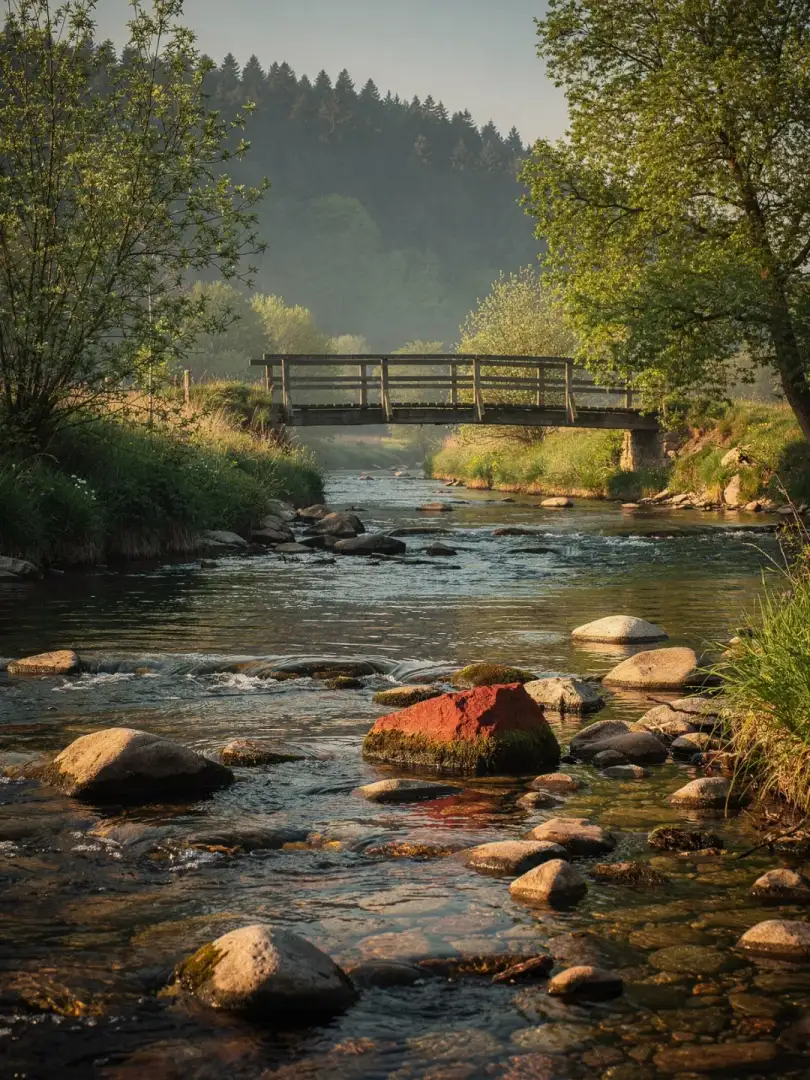
Where does the brewing water for Einbecker beer come from? The town sits in a basin through which the Ilme flows, bordered to the west by the wooded heights of the Solling. The Solling consists mostly of red sandstone, a rock that filters rainwater and typically yields it soft and low in minerals. Exactly which springs the brewery uses today, and how hard its water is, only the brewery itself knows — so no figure is given here.
Something else matters more anyway. Today nearly every brewery treats its water, softening it, stripping out salts, or adding them. The old saying "the water makes the style" belongs to history and no longer holds true today. In the Hanseatic era it was different: whoever brewed in Einbeck used whatever the well in their own courtyard provided.
Hard water rich in sulfate makes bitterness taste sharper and drier, while soft water makes a beer rounder and milder. A dark bock with plenty of malt handles soft water well, since roasted aromas would otherwise quickly turn harsh. That's a brewer's rule of thumb, not a law.
At least as decisive was the ground beneath the town. Beneath the half-timbered houses of Einbeck's old town lie vaulted cellars that stay cool year-round. One example is the Ur-Bock-Keller, now open to visitors as a historic site. In cellars like these, strong beer kept for months, and that was the whole basis of the trade: only a beer that could survive the long journey and lengthy storage could be sold all the way to the Baltic.